Key takeaways
- A knock sensor replacement typically costs $150–$400 at an independent shop when the sensor is easy to reach. The sensor itself costs $30–$150.
- On many V6 and V8 engines the sensor sits under the intake manifold, so labor jumps to 3–6 hours and the bill to $500–$1,200.
- Codes P0325–P0334 point to the knock sensor circuit, but a broken wire or connector is often the real cause and costs much less to fix.
- Dealers often charge $600–$1,500+ for an under-intake job with OEM parts.
- Estimates as of 2026; your price depends on the engine, part brand and local labor rates ($100–$175/hr independent, $150–$250/hr dealer).
The knock sensor replacement cost for most cars in 2026 is about $150 to $400 at an independent shop when the sensor is bolted to the side of the block: roughly $30–$150 for the part and $60–$250 in labor. On many V6 and V8 engines the sensor is buried under the intake manifold, and the total rises to $500–$1,200 because of 3–6 hours of labor plus new gaskets. Dealers commonly charge $600–$1,500 or more for those harder jobs. This guide covers what the sensor does, the P0325–P0334 trouble codes, pinging and other symptoms, whether you can keep driving, and how to avoid paying for a sensor you did not need.
📩 Important: after you sign up, open the email from Super Car Digest and tap Confirm. Your checklist opens right away. Not there? Check Spam or Promotions.
Knock sensor replacement cost in 2026 at a glance
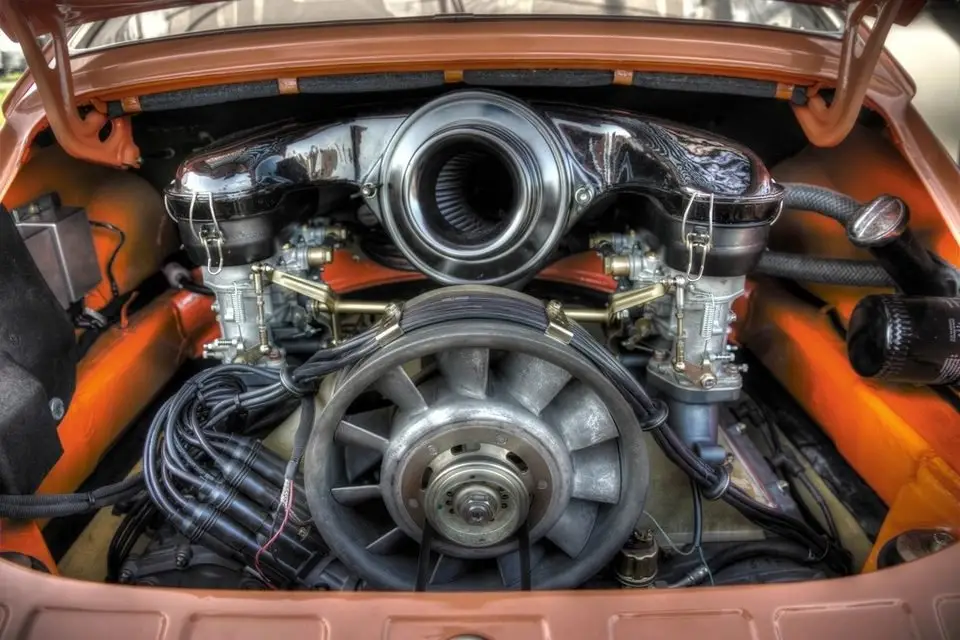
| Job | Parts | Labor | Typical total (independent shop) |
|---|---|---|---|
| Knock sensor, easy access (side of block, 4-cylinder) | $30–$120 | 0.5–1 hr ($50–$175) | $150–$350 |
| Knock sensor, partial access (under starter or heat shield) | $40–$150 | 1–2 hrs ($100–$350) | $200–$500 |
| Knock sensor(s) under intake manifold, V6 or V8 | $60–$300 incl. gaskets | 3–6 hrs ($300–$1,050) | $500–$1,200 |
| Both sensors, under intake, same visit | $80–$350 | 3–6 hrs | $550–$1,300 |
| Knock sensor wiring harness or pigtail | $20–$150 | 0.5–4 hrs | $100–$800 |
| Diagnosis only (code scan, circuit testing) | — | 0.5–1 hr | $100–$175 |
| Dealership, OEM sensor, under intake | OEM ($80–$250 each) | $150–$250/hr | $600–$1,500+ |
Location is the whole story with this repair. The sensor is cheap on almost every car. What you are really paying for is the time it takes to get to it.
What a knock sensor actually does
A knock sensor is a small microphone-like sensor bolted to the engine block. It listens for the sharp vibration of detonation, also called knock or pinging, which happens when fuel in a cylinder ignites at the wrong moment instead of burning smoothly after the spark.
When the sensor hears knock, the engine computer retards the ignition timing until it stops. That protects pistons and head gaskets from damage, especially under load, in hot weather or on low-octane fuel. Most four-cylinder engines have one sensor; many V6 and V8 engines have two, one for each bank.
Why location matters so much
On many inline four-cylinder engines, the sensor is on the side or back of the block and can be reached from above or below in under an hour. On many V-engines, including some older Toyota V6s and several GM truck V8s, the sensors sit in the “valley” between the cylinder banks, under the intake manifold. The shop has to remove the intake, replace the intake gaskets and reassemble everything. That is why two quotes for “the same part” can be $200 apart or $800 apart.
Symptoms and trouble codes
- Check engine light with a code from P0325 to P0334. P0325 and P0330 are circuit faults for sensor 1 (bank 1) and sensor 2 (bank 2). P0326 and P0331 are range or performance faults, P0327/P0332 low input, P0328/P0333 high input, and P0329/P0334 intermittent signal.
- Pinging or rattling from the engine when accelerating or climbing hills.
- Sluggish acceleration and lower fuel economy, because the computer runs conservative timing when it cannot trust the sensor.
- Hesitation under load, such as merging or towing.
A knock code does not always mean a bad sensor. Chafed wiring, a corroded connector, a loose mounting bolt or even a real mechanical noise can set these codes. Pinging can also come from carbon buildup, the wrong fuel octane or old spark plugs with the wrong heat range. A good shop will test the circuit before ordering parts.
Ask for a circuit test first
Before you approve a $900 intake-off job, ask the shop to check the wiring and connector resistance. On some engines the problem is a damaged harness or pigtail, and on a few, the harness itself is sold separately and is the more common failure.
Is it safe to drive with a bad knock sensor?
Usually for a while, with care. When the sensor fails, most engine computers switch to a safer, retarded timing map. The car feels slower and uses a bit more fuel, but the engine is generally protected. A failed sensor will also cause an emissions or inspection failure in states that check for a lit check engine light.
The risk is real knock that nothing is controlling. If you hear audible pinging under load, the engine may not be pulling timing as it should. Sustained detonation can damage pistons, rings and head gaskets.
Stop driving hard if you notice these
Loud, constant pinging when accelerating, a flashing check engine light, or rough running with the knock code. Use the recommended octane fuel, avoid towing and full-throttle driving, and get the car checked soon.
What drives the price up or down
1. Engine layout
Inline four-cylinder engines are usually the cheapest. V6 and V8 engines with sensors in the valley cost the most because of intake removal. Some transverse V6 engines put the rear sensor behind the engine against the firewall, which adds time even without intake removal.
2. One sensor or both
If both sensors sit under the intake, replacing both at once adds only the cost of the second part. Since the labor is the expensive part, many shops recommend doing both on a high-mileage engine to avoid paying for the intake removal twice.
3. Gaskets and extra parts
Intake gaskets ($20–$80) must be replaced whenever the manifold comes off. Some engines also need new throttle body gaskets, coolant if passages are opened, or one-time-use bolts. While the intake is off, it can be a good time to replace a cheap PCV valve or brittle vacuum hoses.
4. OEM vs aftermarket sensor
Knock sensors are tuned to a specific engine’s frequency. Cheap no-name sensors can cause the code to return. On an under-intake job, paying a little more for an OEM or OE-supplier part is worth it, because a repeat repair means paying the same labor again.
Dealer vs. independent shop vs. DIY
| Option | Typical cost | Pros | Cons |
|---|---|---|---|
| Dealership | $300–$1,500+ | OEM sensor, knows the engine | Highest labor rate and parts markup |
| Independent shop | $150–$1,200 | Fair labor rate, can test wiring first | Labor time varies by shop experience |
| Chain shop | $200–$1,200 | Convenient, often free code scan | Free scans are not a full diagnosis |
| DIY | $30–$300 in parts | Lowest cost on easy-access engines | Intake removal needs care, torque specs and new gaskets |
DIY is reasonable on an engine where the sensor is on the outside of the block. Torque matters: an over- or under-tightened sensor can read wrong. Under-intake jobs are possible for experienced home mechanics, but a vacuum leak from a misaligned gasket can create new problems.
How to pay less without cutting corners
- Diagnose before replacing. A $100–$175 circuit test can save you an unnecessary intake removal.
- Replace both sensors under the intake together on a high-mileage engine to avoid paying the labor twice.
- Use a quality OEM or OE-supplier sensor, not the cheapest option.
- Get two quotes, and ask each shop how many labor hours it is quoting.
- Check your coverage. Engine sensors are covered by some emissions warranties and extended plans. See are extended car warranties worth it?
When to walk away from the repair
A knock sensor alone is rarely a reason to give up on a car. Even a $1,200 under-intake job is moderate next to most engine repairs. The math changes if the pinging is real and has already damaged the engine, or if the sensor is one item on a long list with oil burning, a failing transmission and rust. Add up every repair and compare it with the car’s value. Our guide on whether it’s worth fixing an old car explains the 50% rule, and the repair or replace calculator helps you compare the options.
Useful on Amazon for this job
As an Amazon Associate we earn from qualifying purchases. Always confirm fit for your exact vehicle or ask your dentist.
Super Car Digest · $14
The Used Car Buying Playbook
Big repair bill on an older car? Before you pay for it, run the numbers on replacing the car — and if you do switch, don’t overpay for the next one. Budget worksheet, 15-minute VIN screen, test-drive routine, word-for-word negotiation scripts and a 10-point contract check.
Frequently asked questions
How much does it cost to replace a knock sensor?
About $150–$400 at an independent shop when the sensor is easy to reach, and $500–$1,200 when it sits under the intake manifold. Dealers often charge $600–$1,500 or more for the harder jobs. Estimates as of 2026.
What does code P0325 mean?
P0325 means the engine computer sees a fault in the knock sensor 1 circuit on bank 1. It can be the sensor, the wiring or the connector, so the circuit should be tested before replacing the part.
Can a bad knock sensor cause pinging?
Indirectly, yes. If the sensor cannot hear knock, the computer may not retard timing when it should. More often, a failed sensor makes the computer run safe timing, which causes sluggishness rather than pinging.
Why is knock sensor labor so expensive on some cars?
On many V6 and V8 engines the sensors sit under the intake manifold. Removing and reinstalling the intake takes 3–6 hours and requires new gaskets.
Should I replace both knock sensors?
If both are under the intake and the engine has high mileage, yes. The second sensor adds only parts cost, while a later failure would mean paying the full labor again.
Will a bad knock sensor fail an emissions test?
In most states that use an OBD-II plug-in test, a lit check engine light with a stored knock code is an automatic failure.
Sources and methodology
Price ranges combine 2026 estimates from the RepairPal estimator for knock sensor replacement, published labor-time guides, standard OBD-II code definitions, current retail pricing for aftermarket and OEM sensors, and labor at typical 2026 shop rates ($100–$175/hr independent, $150–$250/hr dealer; AAA has reported national averages around $140/hr). These are estimates; your quote will vary by vehicle, region and condition.