Key takeaways
- Replacing one coil-on-plug ignition coil typically costs $150–$400 at an independent shop.
- A full set on a 4-cylinder runs about $350–$800; on a V6 or V8 it’s about $500–$1,200, more if the intake must come off to reach the rear coils.
- Older cars with a single coil pack usually pay $150–$450 for the whole unit.
- Misfire codes P0300–P0308 often point to a coil, but spark plugs, injectors and vacuum leaks cause them too. Swap the coil to another cylinder to confirm.
- Estimates as of 2026; costs depend on the engine, part brand and local labor rates ($100–$175/hr independent, $150–$250/hr dealer).
The ignition coil replacement cost in 2026 is roughly $150 to $400 for one coil on most modern cars at an independent shop, with the part itself usually $40–$150 and labor $50–$250. Replacing every coil on the engine costs $350–$1,200 depending on cylinder count and access, and dealers often charge 30–60% more. Ignition coils turn 12 volts into the tens of thousands of volts that fire each spark plug. When one fails, you get a misfire, a shaking engine and usually a flashing or steady check engine light. Here is what you will pay and how to avoid replacing coils you don’t need.
📩 Important: after you sign up, open the email from Super Car Digest and tap Confirm. Your checklist opens right away. Not there? Check Spam or Promotions.
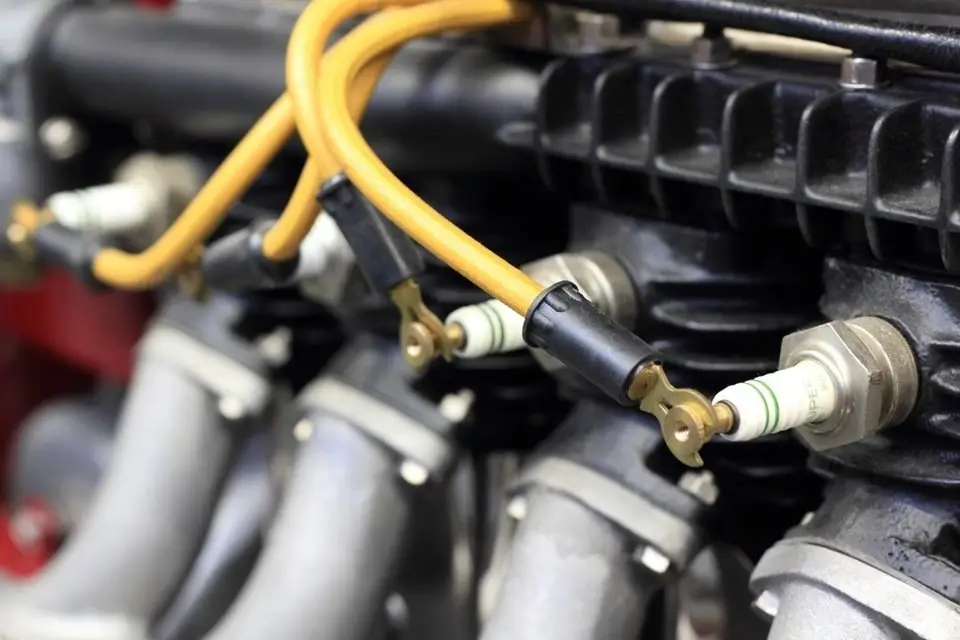
Ignition coil replacement cost in 2026 at a glance
| Job | Parts | Labor | Typical total (independent shop) |
|---|---|---|---|
| One coil-on-plug, easy access | $40–$150 | 0.3–0.5 hr ($50–$90) | $150–$300 |
| One coil-on-plug, intake removal needed | $40–$150 | 1.5–3 hrs | $300–$650 |
| All coils, 4-cylinder | $160–$500 | 0.5–1 hr | $350–$800 |
| All coils, V6 | $240–$800 | 1–3 hrs | $500–$1,200 |
| All coils, V8 | $320–$1,000 | 1–2.5 hrs | $550–$1,400 |
| Coil pack / single coil (older engines) | $50–$250 | 0.5–1 hr | $150–$450 |
| Coils + spark plugs together, 4-cylinder | $200–$600 | 1–1.5 hrs | $450–$950 |
| Dealership, one coil with OEM part | OEM | $150–$250/hr | $250–$550 |
Coil-on-plug vs. coil pack
Most cars built since the early 2000s use coil-on-plug (COP) ignition: one small coil sits directly on top of each spark plug. A four-cylinder has four coils, a V6 has six, and a V8 has eight. When one fails, it usually affects only its own cylinder.
Older engines often use a coil pack — a single block with two or more coils inside — connected to the plugs by spark plug wires. Some use a distributor with one coil for the whole engine. A coil pack is replaced as one unit, and it’s smart to check the plug wires at the same time.
Coils sit on hot engines and see constant heat cycles, so they eventually crack internally. Worn spark plugs make them work harder, because a wider plug gap needs more voltage to fire. That is the main reason coils and plugs are often serviced together.
Signs of a bad ignition coil
- Check engine light, steady or flashing. A flashing light means an active misfire bad enough to damage the catalytic converter.
- Misfire codes: P0300 (random misfire) or P0301–P0308, where the last digit is the cylinder number. Coil circuit codes P0350–P0358 point directly to a coil or its wiring.
- Rough idle or shaking, especially at stops.
- Hesitation or stumbling when accelerating, often worse uphill or under load.
- Loss of power and noticeably worse fuel economy.
- Hard starting or stalling.
- Fuel smell from the exhaust as unburned fuel passes through.
Engine shake at idle can also come from worn motor mounts. The difference: a misfire usually sets a code and runs rough in Park, while a bad mount typically shakes more in Drive and doesn’t set a code.
How to confirm it’s the coil: the swap test
On a coil-on-plug engine, this simple test can save you from buying the wrong part:
- Read the code. Say it’s P0302, a misfire on cylinder 2.
- Swap the coil from cylinder 2 with the coil from cylinder 3. This usually takes one bolt and one connector each.
- Clear the code and drive until the light returns.
- If the code moves to P0303, the coil is bad. If it stays on P0302, the problem is the spark plug, the fuel injector, or compression in that cylinder.
Many shops do the same test as part of diagnosis. A P0300 random misfire across several cylinders is less likely to be one coil and more likely to be a vacuum leak, fuel delivery problem or worn plugs.
Is it safe to drive with a bad ignition coil?
For a short distance, usually yes, but don’t put it off. A dead coil means one cylinder isn’t firing, so the engine runs rough and down on power. Merging and passing can feel weak.
The bigger risk is the catalytic converter. Unburned fuel from the dead cylinder goes into the exhaust and burns inside the converter, which can overheat and destroy it. A new converter can cost $1,000–$2,500 or more. If the check engine light is flashing, drive gently and get it fixed within a day or two. A steady light with a mild misfire gives you a little more time, but aim for days, not weeks.
Look for oil in the spark plug wells
On many engines, a leaking valve cover gasket or tube seal lets oil pool around the spark plugs and soak the coil boots. The coil fails, you replace it, and the new one fails too. If the shop finds oil in the wells, fix the leak at the same time — see our car oil leak repair cost guide. Coolant in a plug well is more serious and needs a proper diagnosis.
Replace one coil or all of them?
If one coil fails on a car with low mileage, replacing only that coil is fine. On a high-mileage engine (around 100,000 miles or more), the other coils have the same age and heat history. Many owners and shops replace them all at once to avoid repeat visits, especially if labor is high because the intake has to come off.
A reasonable middle ground on easy-access four-cylinders: replace the failed coil now and keep a spare in the trunk. On V6 engines where the rear bank is buried, doing all the rear coils during one intake removal usually saves money in the long run.
Pair coils with spark plugs
If your plugs are near or past their service interval, replace them with the coils. The coils are already off, so the added labor is small, and fresh plugs reduce strain on the new coils. Our spark plug replacement cost guide covers intervals and prices.
Dealer vs. independent shop vs. DIY
| Option | One coil (easy access) | All coils, 4-cylinder | Notes |
|---|---|---|---|
| Dealership | $250–$550 | $600–$1,200 | OEM coils, higher labor rate |
| Independent shop | $150–$300 | $350–$800 | OEM or quality aftermarket coils |
| DIY | $40–$150 | $160–$500 | Often a 10 mm socket and 15 minutes |
On many four-cylinder engines, replacing a coil-on-plug is one of the easiest DIY repairs there is: unplug the connector, remove one bolt, pull the coil, push in the new one. A $20–$40 code reader tells you which cylinder to start with. Leave it to a shop if the coils sit under the intake manifold, if you aren’t sure the coil is the cause, or if the misfire comes back after a swap.
Super Car Digest · $14
The Used Car Buying Playbook
Big repair bill on an older car? Before you pay for it, run the numbers on replacing the car — and if you do switch, don’t overpay for the next one. Budget worksheet, 15-minute VIN screen, test-drive routine, word-for-word negotiation scripts and a 10-point contract check.
What drives the price up or down
- Engine layout. Inline four-cylinders are quick. Transverse V6 engines often hide three coils under the intake.
- Part brand. OEM and quality aftermarket coils cost more than bargain online coils, which have a reputation for early failure.
- Diagnosis. If the cause isn’t obvious, expect a $100–$180 diagnostic fee, often credited toward the repair.
- Extra repairs. Oil-soaked wells, worn plugs or a damaged catalytic converter add to the bill.
How to pay less, and when to walk away
- Read the code yourself before visiting a shop. Many parts stores will scan it for free.
- Do the swap test to confirm the coil is at fault.
- Buy OEM or a reputable brand; cheap coils often fail within a year.
- Fix misfires fast to protect the catalytic converter.
- Check coverage. Coils are often covered by factory and some extended warranties; see the average monthly cost of an extended car warranty.
A coil repair is almost always worth doing. The exception is an older car where the misfire has already ruined the catalytic converter, or where misfires come from low compression. In those cases, compare the total with the car’s value and read is it worth fixing an old car?
Frequently asked questions
How much does it cost to replace an ignition coil?
About $150–$400 for one coil at an independent shop, and $350–$1,200 for a full set depending on the engine. Dealers often charge more. Estimates as of 2026.
Should I replace all ignition coils at once?
Not necessarily. Replace just the failed coil on a lower-mileage car. On high-mileage engines or engines where coils are hard to reach, replacing all of them can save labor later.
How long do ignition coils last?
Many last 80,000–150,000 miles or more. Heat, oil leaks and worn spark plugs shorten their life.
Can a bad ignition coil damage the engine?
It rarely damages the engine itself, but a prolonged misfire can overheat and ruin the catalytic converter and wash oil from the cylinder wall.
What does code P0300 mean?
P0300 is a random or multiple-cylinder misfire. It can be a coil, but it is more often worn plugs, a vacuum leak or a fuel problem. Codes P0301–P0308 name a specific cylinder.
Should I replace spark plugs with ignition coils?
If the plugs are due or close to due, yes. The labor overlaps, and fresh plugs reduce the load on the new coils.
Sources and methodology
Price ranges combine 2026 estimates from the RepairPal estimator for ignition coils and spark plugs, published labor-time guides, standard OBD-II misfire code definitions, current retail parts pricing and labor at typical 2026 shop rates ($100–$175/hr independent, $150–$250/hr dealer; AAA has reported national averages around $140/hr). These are estimates; your quote will vary by vehicle, region and engine.