Key takeaways
- On most inline 4-cylinder engines, a valve cover gasket replacement costs $150–$400 at an independent shop. Gasket kits cost $20–$80; labor is usually 1–2 hours.
- V6 and V8 engines have two valve covers and often need the intake removed, so expect $300–$800, and $1,000+ on some tight engine bays.
- The gasket kit should include spark plug tube seals. Leaking tube seals put oil in the plug wells and cause misfires.
- Common signs are a burning oil smell, oil around the top of the engine, and oil on the spark plugs.
- Estimates as of 2026; your price depends on the engine and local labor rates ($100–$175/hr independent, $150–$250/hr dealer).
The valve cover gasket replacement cost in 2026 is about $150 to $400 for most 4-cylinder cars and $300 to $800 for V6 and V8 engines at an independent shop. The parts are cheap, usually $20–$120 for a gasket set, so almost all of the bill is labor. How much depends on what sits on top of the engine. This guide explains what the gasket does, the symptoms of a leak, how long you can drive with one, and how to keep the bill reasonable.
📩 Important: after you sign up, open the email from Super Car Digest and tap Confirm. Your checklist opens right away. Not there? Check Spam or Promotions.
Valve cover gasket replacement cost in 2026 at a glance
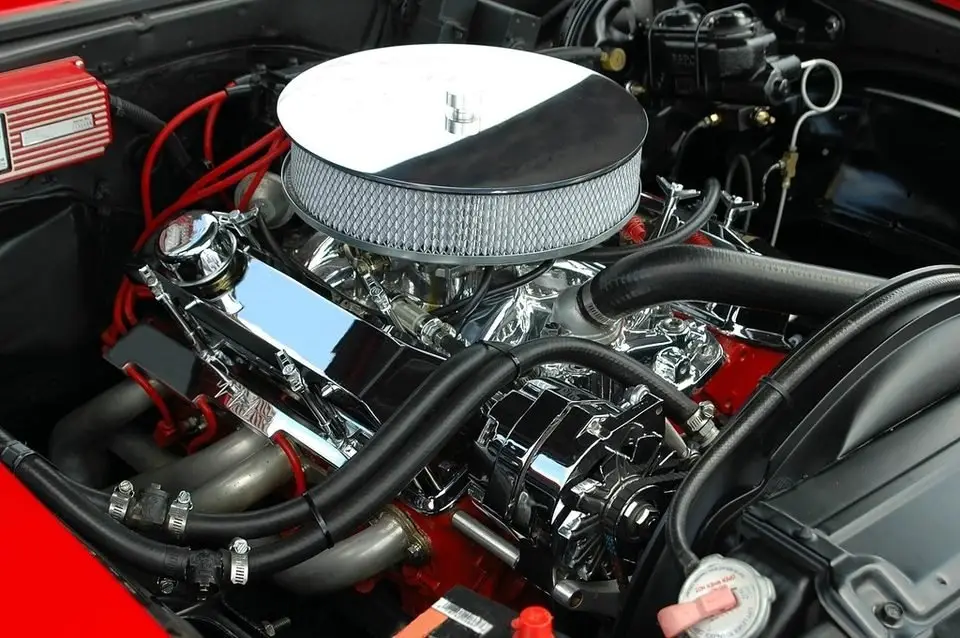
| Engine / job | Parts | Labor | Typical total (independent shop) |
|---|---|---|---|
| Inline 4-cylinder, easy access | $20–$80 | 1–1.5 hrs ($100–$260) | $150–$350 |
| 4-cylinder with coils, intake or turbo parts in the way | $30–$100 | 1.5–2.5 hrs | $250–$500 |
| V6, front cover only | $20–$60 | 1–1.5 hrs | $150–$350 |
| V6, both covers (intake removal often needed) | $50–$150 | 2.5–4.5 hrs | $400–$900 |
| V8, both covers | $50–$150 | 2–4 hrs | $350–$800 |
| Inline 6 / European engines with plastic covers | $80–$400 (cover with gasket) | 1.5–3 hrs | $350–$900 |
| Add spark plugs while the cover is off | $20–$150 | 0–0.5 hr extra | +$40–$200 |
| Dealership, OEM gasket | OEM | $150–$250/hr | $300–$1,200+ |
What a valve cover gasket does
The valve cover sits on top of the cylinder head and covers the camshafts, valves and valve springs. Oil splashes around under it constantly. The valve cover gasket is the rubber or silicone seal between the cover and the head that keeps that oil inside.
Many engines also use spark plug tube seals, small rings that seal around each spark plug well where it passes through the cover. When they harden, oil seeps down into the plug wells. That oil can soak the ignition coil boots and cause misfires.
Over years of heat cycles the rubber gets hard and shrinks. Leaks often begin somewhere between 80,000 and 150,000 miles, though age matters as much as mileage. On some European engines, the plastic valve cover itself warps or cracks, and the gasket comes built into a new cover.
Signs of a leaking valve cover gasket
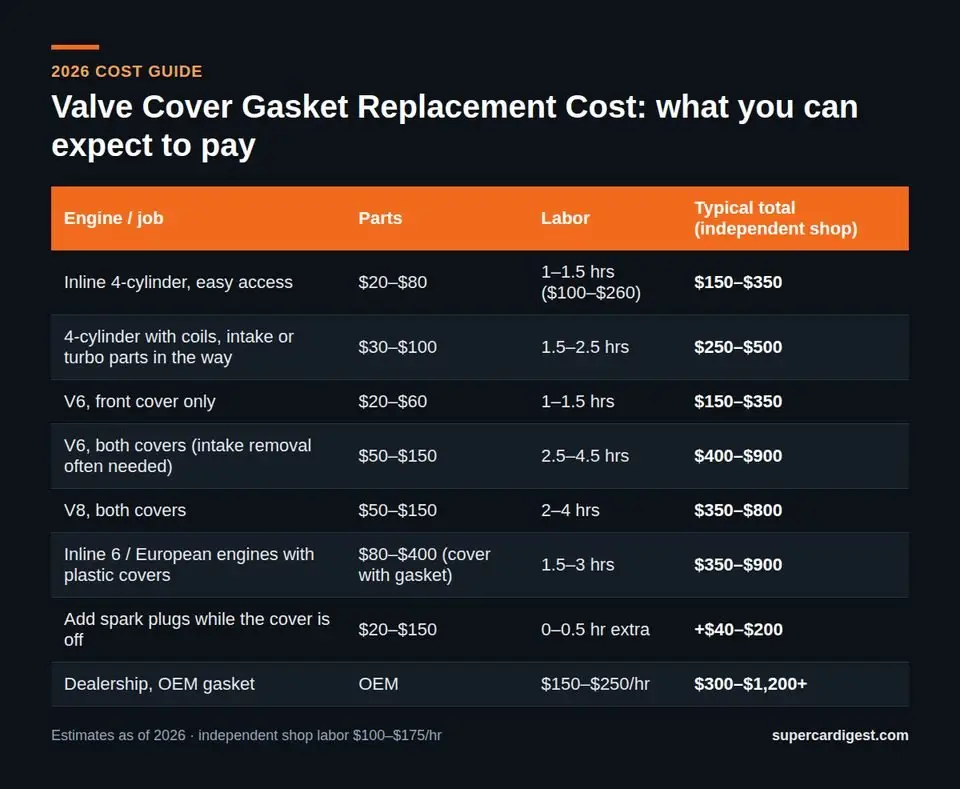
- Burning oil smell after driving, especially when stopped. Oil is dripping onto the hot exhaust manifold.
- Light smoke from under the hood at idle.
- Oil residue or wetness around the edge of the valve cover, often visible with a flashlight.
- Oil on the spark plugs or pooled in the spark plug wells.
- Misfires or a check engine light from oil-soaked coils.
- Low oil level between changes, sometimes with small drops under the car.
Oil found low on the engine is more likely from another seal, like the oil pan, rear main seal or front crank seal. A shop can clean the engine and add UV dye to find the real source. Our car oil leak repair cost guide covers those leaks and their prices.
Is it safe to drive with a leaking valve cover gasket?
A small seep with no smell or smoke is usually not urgent. Many drivers watch it for months, checking the oil level every few weeks. A valve cover leak rarely gets worse overnight.
It does become a problem when oil drips onto the exhaust manifold or collects in the spark plug wells. Burning oil on hot exhaust parts is a fire risk, and oil-soaked coils cause misfires that can damage the catalytic converter. Running the engine low on oil is the most expensive mistake of all.
Fix it soon if you see smoke
Visible smoke from under the hood or a strong burning smell means oil is reaching hot parts. Get it repaired within days, not months, and keep the oil topped off until then.
What drives the price up or down
1. Inline-4 vs. V6 and V8
An inline 4-cylinder has one valve cover, usually right on top. A V6 or V8 has two, one on each bank. On front-wheel-drive V6 engines the rear cover sits against the firewall and is often under the intake plenum. Removing the intake is what turns a $250 job into a $700 one.
2. What is bolted on top
Ignition coils, wiring harnesses, PCV hoses, fuel lines and engine covers all have to come off. Turbocharged engines can have more plumbing in the way.
3. Gasket only vs. new cover
Metal covers can be cleaned and reused. Plastic covers with built-in PCV valves on many BMW, Audi and VW engines often need the whole cover replaced, which can add $100–$400 in parts.
4. Extra work while it is apart
If the spark plugs are due, replace them now. On engines where the intake comes off, it is also the cheapest time for intake gaskets and rear plugs. See our spark plug replacement cost guide for those numbers.
Dealer vs. independent shop vs. DIY
| Option | 4-cylinder | V6 / V8 | Notes |
|---|---|---|---|
| Dealership | $300–$550 | $500–$1,200+ | OEM gaskets, highest labor rate |
| Independent shop | $150–$400 | $300–$900 | Same quality gaskets, lower hourly rate |
| DIY | $20–$100 | $50–$150 | Basic tools, torque wrench, gasket sealant for corners |
On many 4-cylinder engines this is a good first DIY job. Clean the sealing surfaces carefully, put a dab of sealant at the corners where the head meets the timing cover if the manual says so, and tighten the bolts in the correct pattern to the specified torque. Over-tightening is a common reason new gaskets leak. Leave V6 jobs that need intake removal to a shop unless you are experienced.
How to pay less without cutting corners
- Confirm the source. Ask the shop to show you where the oil is coming from before replacing anything.
- Insist on a kit with tube seals. Replacing only the outer gasket can leave the misfire problem behind.
- Combine jobs. Do spark plugs and any intake gaskets at the same visit.
- Use an independent shop. This is routine work with no special tools.
- Check your coverage. Some extended plans cover gaskets and seals, others exclude them. Read the contract, and see the average monthly cost of an extended car warranty.
When to walk away from the repair
A valve cover gasket is usually a good-value repair, even on an older car. It becomes part of a bigger decision when the engine has several leaks at once, burns oil internally, or has low compression. Then you may be paying to seal an engine that is already worn out. Add up all quoted repairs, compare the total with the car’s value, and read is it worth fixing an old car?
If you are buying a used car, a burning oil smell after the test drive is worth investigating. Our how to inspect a used car guide shows where to look.
Super Car Digest · $14
The Used Car Buying Playbook
Big repair bill on an older car? Before you pay for it, run the numbers on replacing the car — and if you do switch, don’t overpay for the next one. Budget worksheet, 15-minute VIN screen, test-drive routine, word-for-word negotiation scripts and a 10-point contract check.
Frequently asked questions
How much does it cost to replace a valve cover gasket?
About $150–$400 for most 4-cylinder engines and $300–$800 for V6 and V8 engines at an independent shop. Dealers and engines that need intake removal can exceed $1,000. Estimates as of 2026.
How long does a valve cover gasket replacement take?
Usually 1–2 hours on a 4-cylinder and 2–4.5 hours on a V6 or V8, especially when the intake must come off.
Can a valve cover gasket leak cause a misfire?
Yes. If the spark plug tube seals leak, oil collects around the plugs and coils and can cause misfires and a check engine light.
How long can I drive with a leaking valve cover gasket?
A minor seep can often wait a few months if you watch the oil level. If you smell burning oil, see smoke, or oil is reaching the spark plugs, fix it promptly.
Will a stop-leak additive fix it?
Seal conditioners sometimes slow minor leaks in hardened rubber seals, but they rarely fix a valve cover leak for long. Replacement is the real repair.
Should the spark plugs be replaced at the same time?
If they are due or oil-soaked, yes. The extra labor is small because the coils are already off.
Sources and methodology
Price ranges combine 2026 estimates from the RepairPal estimator for valve cover gasket replacement, published labor-time guides, current retail pricing for gasket sets and valve covers, and labor at typical 2026 shop rates ($100–$175/hr independent, $150–$250/hr dealer; AAA has reported national averages around $140/hr). These are estimates; your quote will vary by vehicle, engine and region.