Key takeaways
- Inspect in daylight, on dry pavement, with a cold engine — ask the seller not to warm it up.
- Work in a fixed order: paperwork → exterior → under the hood → underneath → interior → test drive. It takes about 45 minutes.
- Bring a flashlight, a small magnet, paper towels and a $20–$30 OBD-II scanner.
- Every problem you find has a price. Write it down — the list becomes your offer.
- If the car passes your check, pay a mechanic $150–$250 for a pre-purchase inspection (PPI). A seller who refuses is giving you your answer.
Knowing how to inspect a used car yourself is the cheapest insurance you can buy: 45 minutes with the used car inspection checklist below will rule out most bad cars before you spend a dollar on a mechanic. You do not need to be a technician. You need a routine, a flashlight, and the discipline to walk away. This guide walks through each step in order, tells you what a problem will cost to fix in 2026, and lists the deal-breakers that should end the visit. For the complete 60-point version you can print or keep on your phone, grab our free checklist PDF.
📩 Important: after you sign up, open the email from Super Car Digest and tap Confirm. Your checklist opens right away. Not there? Check Spam or Promotions.
Before you go: 10 minutes of homework
- ☐ Get the VIN and run a history report (CARFAX, AutoCheck or the free NMVTIS-based checks) for accidents, title brands, odometer readings and number of owners.
- ☐ Check open recalls free at nhtsa.gov/recalls.
- ☐ Look up the price on Kelley Blue Book and Edmunds, then compare 5–10 local listings.
- ☐ Search the model’s known problems for that year — so you know what to listen for.
- ☐ Ask the key questions by message — title in hand? accidents? warning lights? OK with a pre-purchase inspection? Our questions to ask when buying a used car has the full list.
Your used car inspection checklist, step by step
Step 1: Paperwork (5 minutes)
- ☐ Title is in the seller’s name, with no “salvage,” “rebuilt,” “flood” or “lemon” brand.
- ☐ VIN on the title matches the dashboard plate and the driver’s door-jamb sticker.
- ☐ Service records: oil changes, timing belt, transmission fluid, brakes.
- ☐ At a dealer: the FTC Buyers Guide is on the window and shows “As Is” or the warranty terms.
Step 2: Exterior and tires (10 minutes)
- ☐ Walk around from a few steps back. Panels line up, gaps are even, paint matches in sunlight.
- ☐ No overspray on rubber trim or window seals (sign of repainting).
- ☐ Magnet sticks to lower doors, fenders and rocker panels (it will not stick to thick body filler).
- ☐ No bubbling paint at wheel arches or door bottoms (rust from underneath).
- ☐ Look down the sides at an angle for ripples — signs of dents, hail or bodywork. See car dent repair cost and car scratch repair cost to price what you find.
- ☐ Windshield free of cracks and chips in the driver’s view.
- ☐ All lights work, lenses are not fogged.
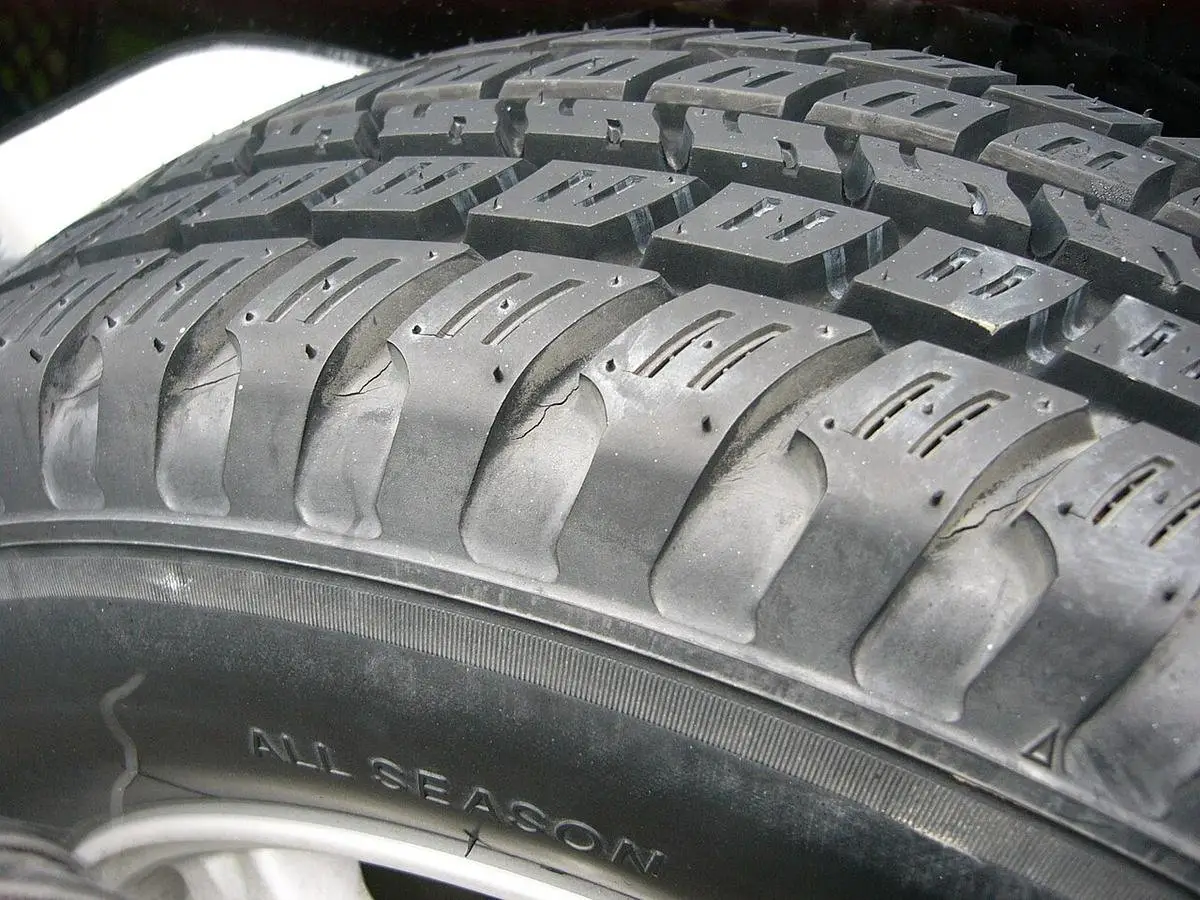
- ☐ Tires have at least 4/32″ of tread, wear evenly across the width, and are under about six years old (date code on sidewall).
- ☐ Look through the wheels at the brake rotors: no deep grooves or heavy lip.
Step 3: Under the hood, engine cold (10 minutes)
- ☐ Oil on the dipstick is amber to dark brown, at the right level — not milky or foamy.
- ☐ Underside of the oil cap is free of creamy sludge.
- ☐ Coolant in the reservoir is at the line and the right color; no oily film or sweet smell of a leak. (A leak can cost $150 to over $3,000 — see coolant leak repair cost.)
- ☐ Transmission fluid (if it has a dipstick) is red or pink and does not smell burnt.
- ☐ Brake fluid is clear to amber, not dark brown.
- ☐ Belts are not cracked; hoses are firm, not soft or swollen.
- ☐ No fresh oil on the engine, no wet areas around gaskets (see car oil leak repair cost).
- ☐ Battery terminals are clean; check the date on the battery label.
- ☐ Have the seller start it while you watch: no loud knocks, rattles lasting more than a second, or blue/white smoke from the exhaust.
Step 4: Underneath (5 minutes)
- ☐ With a flashlight, check the frame rails and subframe: surface rust is normal in salt states; flaking, holes or welds are not.
- ☐ Brake lines are not heavily scaled (rusted lines cost money — see brake line replacement cost).
- ☐ No drips from engine, transmission, differential or shocks.
- ☐ Exhaust has no holes or fresh patch welds.
- ☐ Check the ground where the car was parked for fresh spots.
Step 5: Interior and electronics (8 minutes)
- ☐ With the key on, all warning lights come on briefly and then go out. The check-engine and airbag lights must go off.
- ☐ Plug in the OBD-II scanner: no stored codes, and readiness monitors “ready” (“not ready” can mean codes were just cleared).
- ☐ No musty smell, damp carpet or silt under the mats or in the trunk’s spare-tire well (flood signs).
- ☐ Wear on the pedals, wheel and driver’s seat matches the mileage.
- ☐ AC blows cold within a couple of minutes; heat works. (AC repairs can run $150 to $2,500.)
- ☐ Windows, locks, mirrors, seats, infotainment, backup camera and every USB port work.
- ☐ Two keys or fobs are included — a replacement smart key can cost $200–$500.
The Used Car Buying Playbook
Buy the right used car at the right price
A 7-step system with negotiation scripts, financing math, a 15-minute VIN check and closing checklists. 17-page PDF.
Step 6: The test drive (15–20 minutes)
- ☐ Drive on city streets, a rough road and a highway if possible. Radio off.
- ☐ Transmission shifts smoothly with no slipping, flaring revs, hard clunks or delay going into gear.
- ☐ Car tracks straight on a flat road; steering wheel is centered.
- ☐ Brakes stop straight without pulsing, grinding or pulling (pulling can mean a sticking caliper — see brake caliper replacement cost).
- ☐ No clunks over bumps or excessive bouncing (worn suspension — see suspension repair cost).
- ☐ No humming that changes with speed (wheel bearing) or whining that changes with throttle.
- ☐ Temperature gauge stays in the middle.
- ☐ After the drive, look under the car again and recheck for smoke, smells and new drips.
Deal-breakers: walk away if you find these
- Frame rust with holes or flaking, or signs of frame repair.
- A branded title (salvage, rebuilt, flood, lemon) you were not told about, or a title not in the seller’s name.
- Milky oil or oil in the coolant (possible head gasket).
- Transmission that slips, shudders or delays going into gear.
- Airbag light stays on.
- Odometer reading that does not match records or the history report.
- A seller who will not allow a pre-purchase inspection.
Turn your findings into an offer
Most cars will not be perfect. That is fine — every issue simply has a dollar value. Write down each item with a realistic repair range from our repair cost guides: tires due ($500–$1,100 a set), brakes ($400–$900 an axle), a weeping water pump (~$900–$1,100), a scratched bumper ($300–$800). Then subtract a reasonable share of the total from your target price. Mileage matters less than maintenance; see how many miles is too many for a used car. When you are ready to make the offer, use the scripts in how to negotiate a used car price, and time your purchase well (see the best time to buy a used car).
60 inspection points, deal-breakers, negotiation scripts and a cost worksheet — printable or on your phone.
Why you still need a pre-purchase inspection
Your own check filters out the obvious losers. A pre-purchase inspection (PPI) by an independent mechanic finds what you cannot see: the car on a lift, a full scan of every module, compression or leak-down concerns, hidden accident repairs. ConsumerAffairs reports typical PPI prices of about $150–$250 (RepairPal estimates around $186–$273), with luxury or performance cars costing more. Choose a shop the seller does not recommend, and if possible one that specializes in the brand.
One more check before you sign: run the car through the True Cost of Ownership calculator. Insurance, fuel, repairs and depreciation can make a cheaper car the more expensive one to own.
The Used Car Buying Playbook (2026 Edition)
A 7-step system to buy the right used car without overpaying: budget worksheet, VIN check, test-drive routine, word-for-word negotiation scripts, and a list of dealer add-ons to refuse.
17-page printable PDF · instant download · 30-day money-back guarantee
Frequently asked questions
How long does it take to inspect a used car?
About 45 minutes for your own walk-around and test drive. A professional pre-purchase inspection takes roughly 1–2 hours.
How much does a pre-purchase inspection cost?
Typically $150–$250 at an independent shop; more for luxury, performance or electric vehicles, and for mobile inspectors who come to the car. Estimates as of 2026.
What is the most important thing to check on a used car?
The title and history first, then signs of major mechanical trouble: milky oil, a slipping transmission, frame rust and warning lights. Cosmetic issues can be negotiated; those usually cannot.
Can I inspect a used car myself without a mechanic?
You can screen it yourself with this checklist and catch most obvious problems. For a car you are serious about, still pay for a professional PPI before you hand over money.
Should a dealer car be inspected too?
Yes, even certified pre-owned cars. Reputable dealers allow independent inspections; one that refuses is a warning sign.