Key takeaways
- One brake line (the most common repair) costs $150–$350 at an independent shop: $20–$80 in parts and 1–2 hours of labor. A flexible brake hose at a wheel runs $100–$250.
- Replacing every hard line on a rusted vehicle costs $800–$2,000+, mostly labor (4–8 hours). On rust-belt pickups and body-on-frame SUVs it can top $2,500.
- A failed brake line is not a “drive it to the shop” problem. If the pedal sinks to the floor or you see fluid at a wheel, have the car towed ($75–$150) — it is cheaper than a crash.
- A brake fluid flush ($80–$150) is unavoidable with any line replacement: the system is opened and must be bled.
- Rust is the real enemy. If one line has rusted through, the others are usually close behind — on a 10+ year-old car from a salt state, pricing the whole set is often smarter than paying for one line a year.
Brake lines are the thin steel tubes and short rubber hoses that carry brake fluid from the master cylinder to each wheel. When one corrodes through or a hose splits, you lose pressure in half of the system — and the pedal goes soft, long, or straight to the floor. It is one of the few repairs that is both relatively cheap and absolutely non-negotiable. This guide gives you real 2026 prices from US shops, explains why quotes range from $150 to over $2,000, and shows you how to avoid paying for more than you need.
📩 Important: after you sign up, open the email from Super Car Digest and tap Confirm. Your checklist opens right away. Not there? Check Spam or Promotions.
Brake line replacement cost in 2026 at a glance
| Repair | Parts | Labor | Typical total (independent shop) |
|---|---|---|---|
| One steel brake line (section or single run) | $20–$80 | 1–2 hrs ($100–$250) | $150–$350 |
| One flexible brake hose (at a wheel) | $15–$60 | 0.5–1 hr ($60–$150) | $100–$250 |
| Front or rear lines only (2–3 lines) | $60–$200 | 2–4 hrs ($250–$600) | $350–$800 |
| All hard lines, bulk nickel-copper tubing | $80–$200 | 4–8 hrs ($500–$1,400) | $800–$1,600 |
| All hard lines, pre-bent OEM kit | $250–$700 | 4–8 hrs ($500–$1,400) | $1,000–$2,200 |
| Brake fluid flush and bleed (always added) | $15–$30 | 0.5–1 hr | $80–$150 |
| Dealership (any of the above) | OEM parts | $150–$250/hr | +30–60% |
The spread is wide because “brake line replacement” can mean three very different jobs: splicing in one short section where a line rusted through, replacing one full run from the ABS module to a wheel, or re-plumbing the whole car. The parts are cheap in every case. What you are paying for is time — and on a rusty 12-year-old truck, time is what the job consumes.
What drives the price up or down
1. How much rust the mechanic has to fight
This is the single biggest factor. In a dry state, a brake line swap is a clean two-hour job. In Michigan, Ohio, Pennsylvania, New York or anywhere roads are salted, the fittings are seized, the retaining clips crumble, and the line is often fused to the fuel line next to it. Shops quote more hours because they know they will spend them. Expect the high end of every range above if your car has spent its life in the salt belt.
2. Which line failed
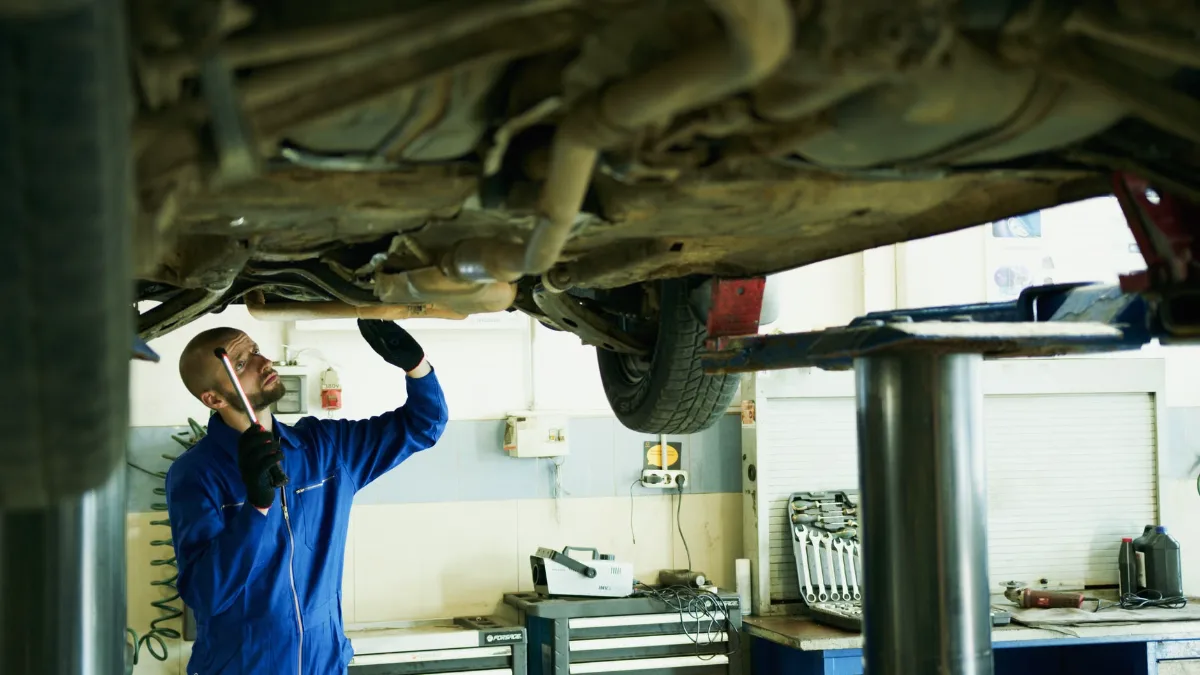
Lines that run above the fuel tank or along the frame rail to the rear wheels are the longest and hardest to reach — sometimes the tank or a subframe has to be dropped, adding 1–3 hours. A short line near the master cylinder is the cheapest. Rear lines on pickups and body-on-frame SUVs (Silverado, F-150, Tahoe, Explorer of the 2000s–2010s) are notorious: $400–$700 for the rear pair is normal in the rust belt.
3. Bulk tubing vs. pre-bent OEM lines
Most independent shops bend new lines from a roll of nickel-copper (NiCopp) tubing: a 25-ft coil costs $25–$45, it never rusts, and it is easy to flare. Dealers and some chains install pre-bent OEM steel lines that cost $150–$700 per kit and ship rust-prone unless coated. For a daily driver, NiCopp is the better product at the lower price — ask for it by name.
4. Labor rate where you live
Independent shops charge $95–$140/hr in most of the Midwest and South, $140–$190/hr in coastal metros, and dealers add $40–$80/hr on top. A 4-hour full-line job is $400 in labor in Indiana and $750 in San Jose for the same work.
5. What else is wrong when they get in there
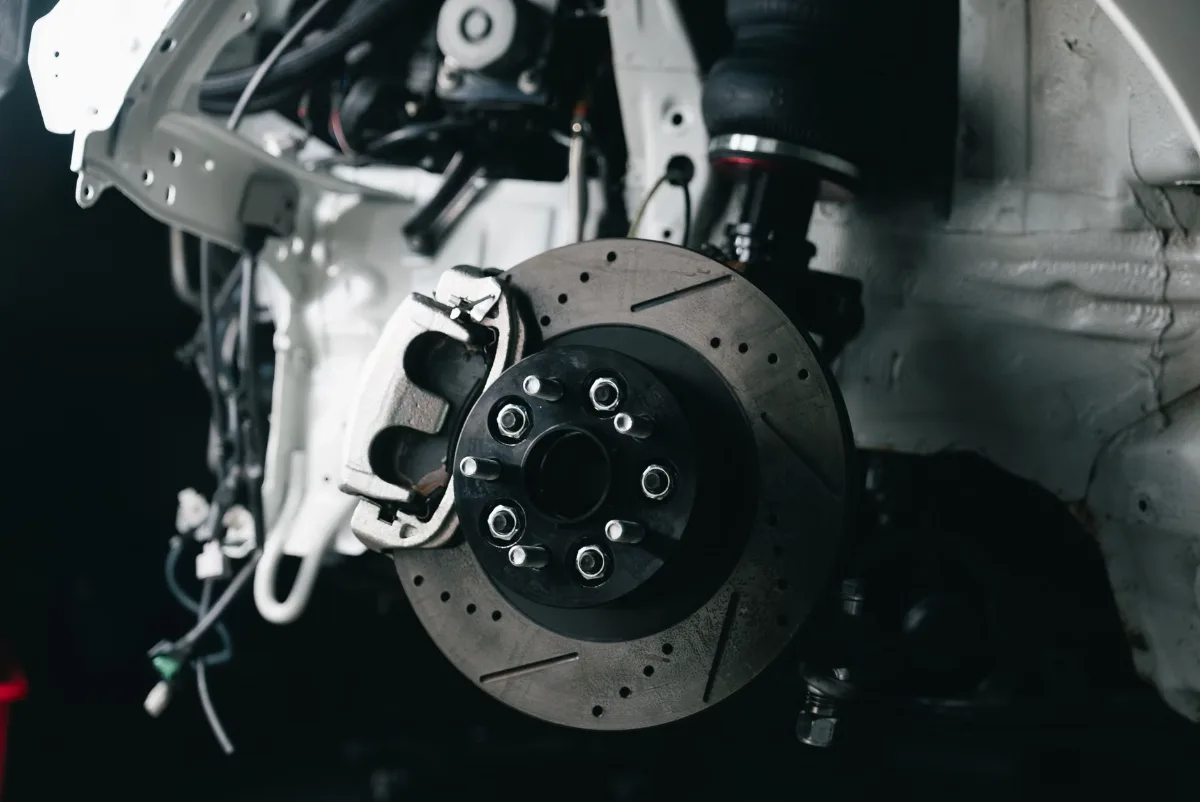
Rusted lines live next to rusted calipers, wheel cylinders and bleeder screws. It is common for a $250 line quote to become $600 because a bleeder snapped or a caliper piston would not retract. Ask the shop up front: “If a bleeder breaks, what does that add?” A good shop will tell you before they start. See our other repair cost guides for caliper and brake numbers.
Steel line vs. rubber hose: which one do you have?
Every car has both. Hard lines are rigid steel (or nickel-copper) tubes that run the length of the car; they fail by rusting from the outside in. Brake hoses are the 12–20 inch flexible rubber sections at each wheel that let the suspension move; they fail by cracking, ballooning, or collapsing internally — a collapsed hose makes one brake drag and overheat. Hoses are cheaper and faster to replace, but mechanics often recommend doing them in pairs (both fronts or both rears) so braking stays even, which puts you at $200–$450 for the pair.
Money-saving tip
If the shop is already replacing a rusted rear line, ask what it would cost to do the other rear line at the same time. The car is already on the lift, the system is already open and will be bled anyway, so the second line usually adds only $80–$150 instead of another full $250–$350 visit six months later.
Signs your brake lines are failing
- Pedal sinks or feels spongy — air or fluid loss in the system. This is the classic symptom and it means stop driving.
- Brake warning light — on most cars this is the low-fluid float in the reservoir, which means the fluid went somewhere.
- Wet spot or drip inside a wheel — brake fluid is clear-to-amber and slightly oily. Check the inner sidewall of each tire and the ground under the wheels.
- Car pulls to one side under braking — a collapsed hose or a leak on one circuit.
- Visible rust scale or weeping on the lines — have them inspected at every oil change once a car is 8–10 years old in a salt state.
- Reservoir keeps needing top-ups — brake fluid does not get “used up”. If it drops, it is leaking.
Do not drive on a leaking brake line
Modern cars have two separate brake circuits, so one failed line usually leaves you with weak brakes rather than none — but the pedal travel doubles, stopping distance can double, and the second circuit may be just as rusty. A tow ($75–$150 locally, often free with AAA or your insurance’s roadside plan) is always cheaper than the alternative.
Repair one line or replace them all?
This is the decision that actually determines your bill. Use these rules:
| Situation | Smart move | Expected cost |
|---|---|---|
| Car under 8 years old, one hose or line damaged (road debris, accident) | Replace only the damaged part | $100–$350 |
| Car 8–12 years old, one line rusted through, others show surface rust | Replace the failed line + its pair; budget for the rest within 1–2 years | $300–$600 now |
| Car 12+ years old from a salt state, line rusted through, heavy scale elsewhere | Replace all hard lines in nickel-copper in one visit | $800–$1,600 |
| Car worth under $3,000 and needs full lines plus calipers/other rust repairs | Run the numbers before committing | Use the calculator below |
A full set of lines on an old but otherwise healthy car is usually worth it: $1,200 buys several more years of a vehicle you already own, versus $5,000–$8,000 in first-year depreciation, tax and interest on a replacement. But if the brake lines are one item on a long rust list — rotted frame, rusted fuel lines, failing rear calipers — the math changes. Put your numbers into the Repair or Replace calculator before you say yes to a $2,000 quote on a $3,000 car.
Can you replace brake lines yourself?
Technically yes, and the parts are only $40–$120 (tubing, fittings, a flaring tool, fluid). In practice this is one of the repairs we steer most DIYers away from. You need a double-flare or bubble-flare tool used correctly (a bad flare leaks under pressure), a line wrench set, the patience to free seized fittings without rounding them off, and a safe way to bleed all four corners afterward — on many cars with ABS that means a scan tool to cycle the module. A mistake here does not leave you stranded; it leaves you without brakes at 60 mph. If you are an experienced home mechanic, budget a full weekend and a $60–$100 flaring tool. Everyone else: pay the $150–$350.
How to pay less without cutting corners
- Get two quotes, one from an independent shop. Dealers are 30–60% more for this job and offer no real advantage — brake lines are not model-specific technology.
- Ask for nickel-copper tubing. Cheaper than OEM pre-bent lines and it will outlast the car.
- Combine the fluid flush. If your brake fluid is more than 3 years old, the flush that comes with the job is one you needed anyway — do not pay for it twice.
- Do pairs, not singles, when the car is already apart (see the tip above).
- Check your warranty. Brake lines are rarely covered by extended warranties (they count as wear and corrosion), but a car under 5 years / 60,000 miles with a corrosion warranty may have a claim — ask the dealer before paying.
- Use the right financing. A $1,500 line job on a credit card at 24% APR costs an extra $180 if you carry it a year. Many shops offer 6–12 months no-interest through Synchrony or Affirm; a credit union personal loan is cheaper still.
How to make your next set of brake lines last
Brake lines rarely fail without warning if someone is looking. Ask for a quick visual check of the lines every tire rotation — the car is already on the lift and it takes two minutes. Rinse the underbody at a car wash after winter storms if you live where roads are salted; most corrosion starts where salt slurry sits in the frame rails and clips. Change the brake fluid every 2–3 years: fluid absorbs moisture, and moist fluid corrodes lines from the inside as well. And when a line is replaced, insist on nickel-copper — it costs the same and removes rust from the equation for the life of the car.
Super Car Digest · $14
The Used Car Buying Playbook
Big repair bill on an older car? Before you pay for it, run the numbers on replacing the car — and if you do switch, don’t overpay for the next one. Budget worksheet, 15-minute VIN screen, test-drive routine, word-for-word negotiation scripts and a 10-point contract check.
Get the Playbook →Frequently asked questions
How much does it cost to replace one brake line?
$150–$350 at an independent shop in 2026, including the fluid bleed. The line itself is $20–$80; the rest is 1–2 hours of labor. Hard-to-reach rear lines on trucks and rusted vehicles can reach $400–$500.
How much does it cost to replace all brake lines?
$800–$1,600 with bulk nickel-copper tubing at an independent shop, $1,000–$2,200 with pre-bent OEM lines, and $1,500–$3,000 at a dealership on a heavily rusted truck or SUV.
How long does brake line replacement take?
One line: 1–2 hours, usually same-day. All lines: 4–8 hours, often a one- or two-day job if parts have to be ordered or the fuel tank has to come down.
Is a brake line leak covered by insurance?
Not for rust or wear. If a line was damaged in a collision or by road debris, it can be part of a collision or comprehensive claim — but with a $500–$1,000 deductible, a single-line repair rarely makes sense to claim.
How long do brake lines last?
Steel lines last 10–20 years in dry climates and as little as 7–10 years in salt states. Rubber hoses typically last 10–15 years or 100,000+ miles. Nickel-copper replacement lines effectively last the life of the vehicle.
Can a brake line be patched instead of replaced?
A rusted section can be cut out and a new piece spliced in with proper flared unions — that is a legitimate repair and the cheapest option ($150–$250). Compression fittings, tape, or epoxy are not: they are illegal for brake lines in most states’ inspection rules and they fail under braking pressure.
Sources and methodology
Price ranges combine 2026 estimates from RepairPal, FIXD and NuBrakes, with labor adjusted to 2026 national shop-rate averages ($100–$175/hr independent, $150–$250/hr dealer). Parts pricing reflects current retail for nickel-copper tubing, OEM pre-bent kits and brake hoses. Your quote will vary by vehicle, corrosion and region.