Key takeaways
- Brake shoes only on one axle typically cost $150–$350 at an independent shop.
- Shoes plus new drums usually run $300–$600 per axle; a full rebuild with wheel cylinders and a hardware kit is $400–$800.
- Drum brakes are usually on the rear axle and last a long time — shoes commonly go 50,000–80,000 miles or more.
- Dealers often charge $400–$900 per axle for the same work.
- Estimates as of 2026; costs depend on the vehicle, part quality and local labor rates ($100–$175/hr independent, $150–$250/hr dealer).
The drum brake replacement cost in 2026 ranges from about $150 to $350 per axle for new brake shoes at an independent shop, rising to $300–$600 when the drums are replaced too and up to roughly $800 for a full rebuild. Drum brakes are still used on the rear wheels of many budget cars, older pickups and even some newer EVs, because they are cheap, durable and have a built-in parking brake. Below are the real numbers, what each part does, and how to keep a simple job from turning into an expensive one.
📩 Important: after you sign up, open the email from Super Car Digest and tap Confirm. Your checklist opens right away. Not there? Check Spam or Promotions.
Drum brake replacement cost in 2026 at a glance
| Job (per axle) | Parts | Labor | Typical total (independent shop) |
|---|---|---|---|
| Brake shoes only | $30–$90 | 1–2 hrs ($100–$300) | $150–$350 |
| Shoes + hardware kit (springs, adjusters) | $50–$130 | 1–2 hrs | $180–$400 |
| Shoes + new drums | $110–$300 | 1.5–2.5 hrs | $300–$600 |
| Full rebuild: shoes, drums, wheel cylinders, hardware | $170–$400 | 2–3 hrs | $400–$800 |
| Wheel cylinder replacement (pair) + bleed | $30–$100 | 1–2 hrs | $150–$350 |
| Resurfacing drums (if within spec) | — | $15–$35 per drum | $30–$70 |
| Parking brake cable | $20–$80 | 1–2 hrs | $120–$350 |
| Dealership, OEM parts | OEM | $150–$250/hr | $400–$900 |
What’s inside a drum brake

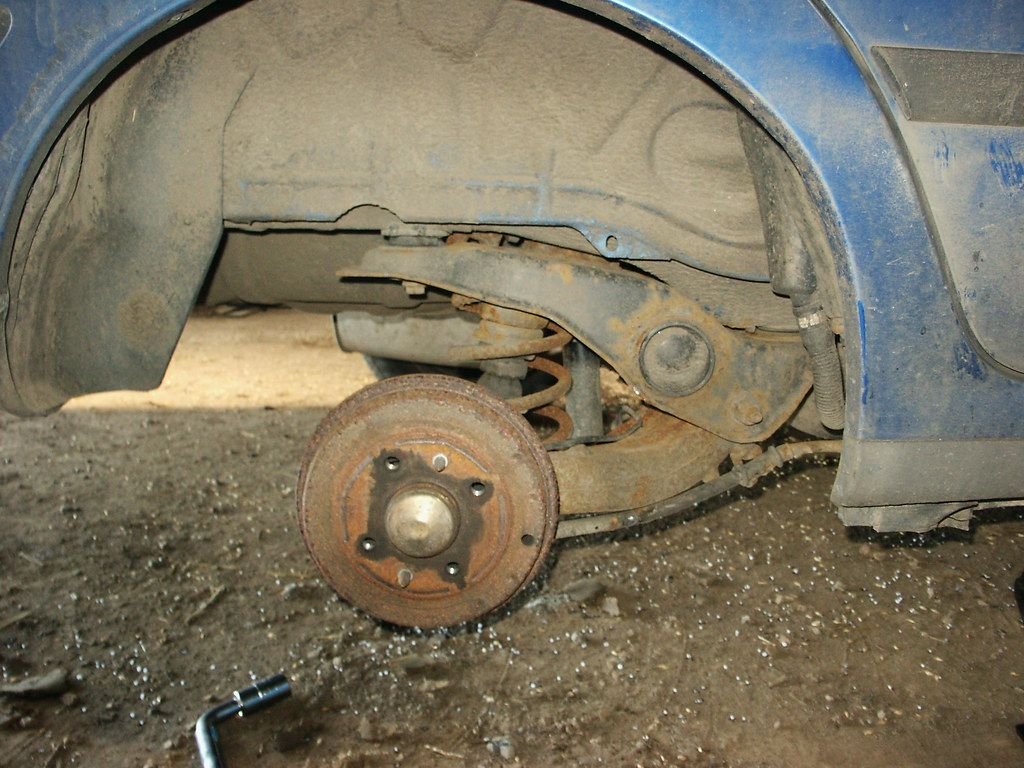
- Drum — the cast-iron “bowl” that spins with the wheel.
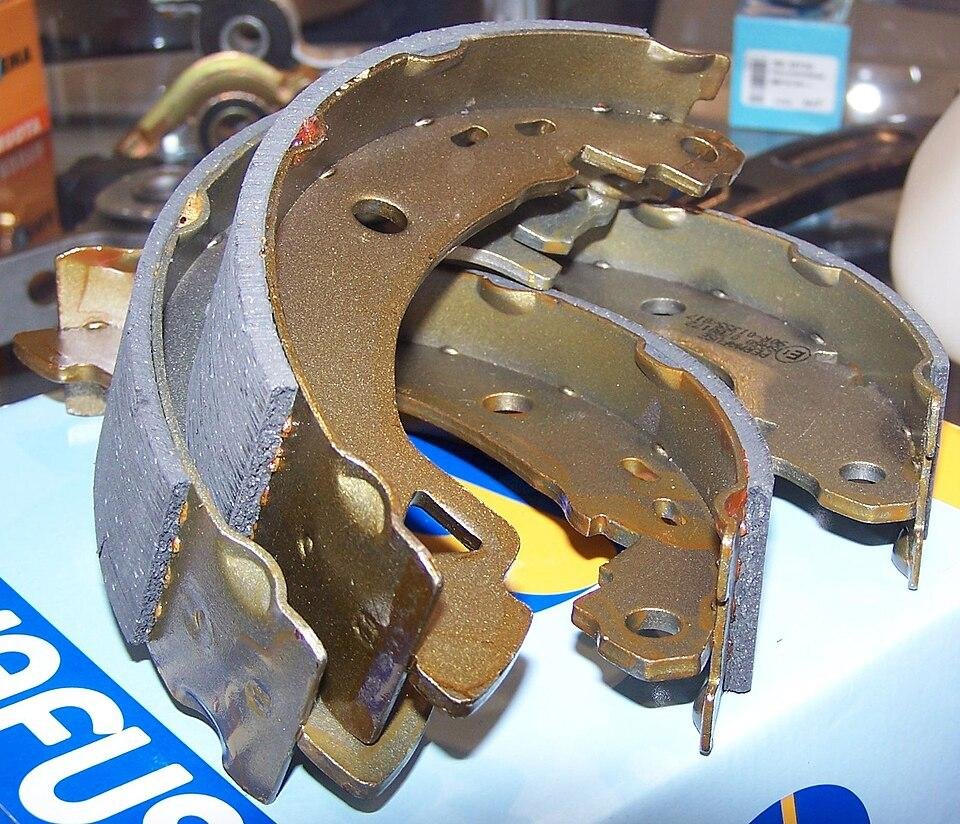
- Brake shoes — two curved pieces with friction lining that press outward against the drum.
- Wheel cylinder — a small hydraulic cylinder that pushes the shoes out when you press the pedal.
- Hardware — return springs, hold-down springs and a self-adjuster that keeps the shoes close to the drum.
- Parking brake lever and cable — mechanically apply the rear shoes.
A basic “brake job” is just shoes. A complete job replaces everything that wears or leaks. The right choice depends on what the technician finds once the drum is off.
What drives the price up or down
1. Whether the drums can be reused
Every drum has a maximum diameter cast into it. If it is worn beyond that, scored, cracked or out of round, it must be replaced. Drums for common cars cost $40–$120 each, so replacement adds $80–$240 in parts. Many shops no longer resurface drums because new ones are cheap and resurfacing takes time.
2. Leaking wheel cylinders
If brake fluid is leaking from a wheel cylinder, it soaks the shoes and they must be replaced. Wheel cylinders are inexpensive ($15–$50 each), but the job then requires bleeding the brakes, adding labor and fluid. Many shops replace them preventively on high-mileage cars.
3. Seized drums
Rust can weld a drum to the hub, and a lip of wear can trap it over the shoes. Freeing a stuck drum can add an hour of labor, and sometimes a broken drum, in snowy states.
4. Hardware condition
Weak or rusted springs and a seized self-adjuster are why some drum brakes drag, squeak or let the pedal travel too far. A $20–$40 hardware kit is cheap insurance when replacing shoes.
Signs your drum brakes need replacing
- Scraping or grinding from the rear — the shoe lining is gone and metal is hitting the drum.
- Parking brake needs many more clicks, or no longer holds the car on a hill.
- Brake pedal travels lower than it used to, often because the self-adjuster is stuck.
- Pulsing from the rear when braking — an out-of-round drum.
- Wet inner tire sidewall or fluid at the backing plate — a leaking wheel cylinder.
- Rear wheels lock up early in light braking, often from fluid-soaked shoes.
- Squealing or a hot rear wheel from shoes dragging.
Don’t ignore a leaking wheel cylinder
A wheel cylinder leak doesn’t just ruin the shoes; it lets fluid leave the system and air in. Over time the pedal goes soft and the rear brakes stop doing their share. If you see fluid at a rear wheel, get it inspected promptly — and check your fluid reservoir level.
Drum vs. disc brakes: costs over time
Drum brakes are usually cheaper to own than disc brakes on the same axle. Rear shoes often last 50,000–80,000 miles or more because the rear axle does less of the braking, and parts are inexpensive. Rear disc pads may need replacing every 30,000–60,000 miles. The trade-off is that drums take longer to service and are less effective at shedding heat, which is why they are rarely used on the front.
Converting rear drums to discs is possible with aftermarket kits, but on a typical daily driver it costs $500–$1,500 or more installed and rarely pays back. It mostly makes sense for performance or towing builds.
Money-saving tip
When shoes are replaced, ask the shop to adjust the parking brake and lubricate the backing-plate contact points. These take minutes, prevent squeaks and dragging, and help the new shoes last their full life. Also ask whether your brake fluid is due — if wheel cylinders are being replaced, the bleed is a good time for a fluid flush.
Can you replace drum brakes yourself?
Yes, but drum brakes are fiddlier than disc pads. The springs are under tension, and the parts must go back in exactly the right positions. Do one side at a time so you always have a reference, and take photos before you disassemble. You will need jack stands, a brake spring tool (about $10–$20), and possibly a puller for a stuck drum. Parts for one axle are roughly $50–$300.
Hire a pro if wheel cylinders are leaking and you aren’t comfortable bleeding brakes, if the drums are seized, or if the vehicle has an unusual parking-brake design. After any DIY drum job, adjust the shoes and test the brakes at low speed before driving normally.
How to pay less without cutting corners
- Ask for drum measurements. If drums are within spec and smooth, they can stay.
- Get an independent quote. Rear drum work is basic and doesn’t need a dealer.
- Use quality mid-grade shoes, not the cheapest economy line.
- Replace wheel cylinders only if leaking — unless the car has very high mileage and the shop shows wet boots.
- Don’t wait for grinding. Once metal touches the drum, a $200 shoe job becomes a $500 drum job.
Is it worth fixing on an older car?
Drum brake work is among the cheapest repairs on any car, so it is almost always worth doing. When it is one of many problems at once — say, rear brakes, a coolant leak and worn suspension — add everything up and compare it with the car’s value in the Repair or Replace calculator. Our guide to whether it’s worth fixing an old car walks through the 50% rule.
Super Car Digest · $14
The Used Car Buying Playbook
Big repair bill on an older car? Before you pay for it, run the numbers on replacing the car — and if you do switch, don’t overpay for the next one. Budget worksheet, 15-minute VIN screen, test-drive routine, word-for-word negotiation scripts and a 10-point contract check.
Frequently asked questions
How much does it cost to replace drum brakes?
About $150–$350 per axle for shoes, $300–$600 with new drums, and $400–$800 for a full rebuild at an independent shop. Estimates as of 2026.
How long do drum brakes last?
Rear brake shoes commonly last 50,000–80,000 miles or more; drums often outlast two sets of shoes. Driving style and load make a big difference.
Should drums be replaced with the shoes?
Only if they are worn past the maximum diameter, scored, cracked or out of round. Otherwise they can be reused, sometimes after a light resurfacing.
How long does a drum brake job take?
Typically 1–2 hours per axle for shoes, and 2–3 hours for a full rebuild including bleeding.
Why do new cars still have drum brakes?
They are cheap, last a long time, integrate the parking brake easily, and resist corrosion well on EVs whose rear brakes are rarely used thanks to regenerative braking.
Sources and methodology
Price ranges combine 2026 estimates from the RepairPal estimator for brake shoes, drums and wheel cylinders, published labor-time guides, current retail parts pricing and labor at typical 2026 shop rates ($100–$175/hr independent, $150–$250/hr dealer; AAA has reported national averages around $140/hr). These are estimates; your quote will vary by vehicle, region and condition.