Key takeaways
- A proper tire patch or plug-patch combo usually costs $20–$50 at an independent shop or tire store.
- A simple plug costs about $10–$25, and some tire stores repair flats for free on tires they sold.
- Only punctures in the tread area up to about 1/4 inch are repairable. Sidewall and shoulder damage means a new tire.
- Many run-flat tire makers limit or prohibit repairs, especially after the tire has been driven flat.
- Estimates as of 2026; a new tire costs roughly $100–$350+ installed if the old one can’t be fixed.
How much does it cost to patch a tire? In 2026, most shops charge $20 to $50 to dismount the tire, patch the puncture from the inside, remount and balance it. A quick plug from the outside is cheaper at $10 to $25, and many tire chains fix flats for free, especially on tires bought from them. The total tire repair cost rises if the TPMS sensor is damaged or the tire turns out to be unrepairable. This guide covers plug vs. patch, what can and can’t be repaired, run-flat rules, and when it is time for a new tire.
📩 Important: after you sign up, open the email from Super Car Digest and tap Confirm. Your checklist opens right away. Not there? Check Spam or Promotions.
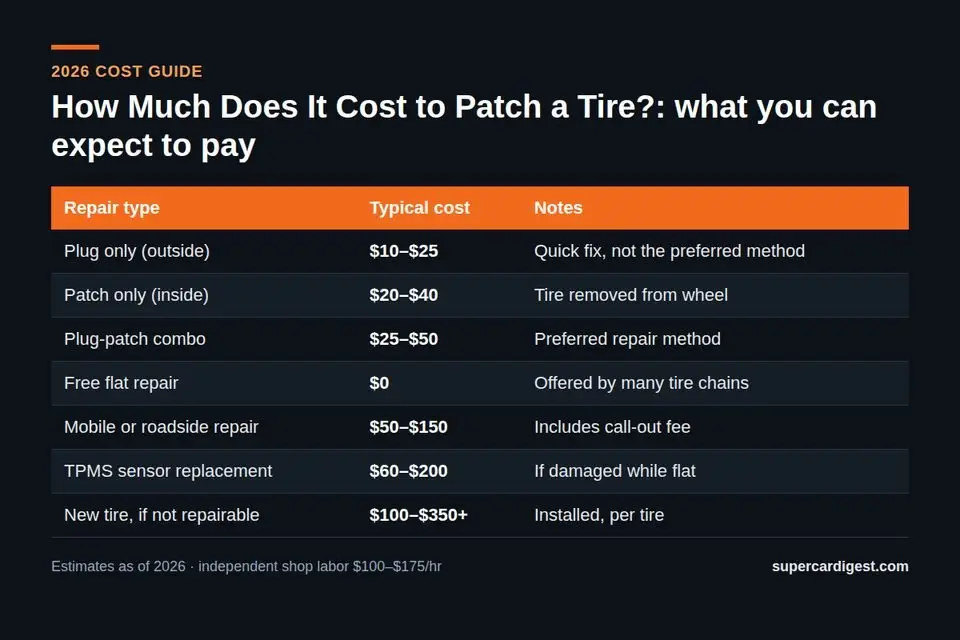
Tire repair cost in 2026 at a glance
| Repair type | Typical cost | Notes |
|---|---|---|
| Plug only (outside) | $10–$25 | Quick fix, not the preferred method |
| Patch only (inside) | $20–$40 | Tire removed from wheel |
| Plug-patch combo | $25–$50 | Preferred repair method |
| Free flat repair | $0 | Offered by many tire chains |
| Mobile or roadside repair | $50–$150 | Includes call-out fee |
| TPMS sensor replacement | $60–$200 | If damaged while flat |
| New tire, if not repairable | $100–$350+ | Installed, per tire |
If you have roadside assistance through your insurer, auto club or new-car warranty, a tow or spare-tire change may already be covered. Check before paying for a mobile service.
Plug vs. patch vs. plug-patch combo
Tire plug
A plug is a sticky rubber strip pushed into the hole from the outside. It can be done without removing the tire from the wheel, which makes it fast and cheap. The downside is that nobody inspects the inside of the tire for damage, and the plug does not seal the inner liner. Many drivers use plug kits as a temporary roadside fix.
Tire patch
A patch is applied to the inside of the tire after it is removed from the wheel. The technician can see whether the tire was damaged by being driven while low. A patch alone seals the liner but does not fill the hole through the tread, which can let water reach the steel belts.
Plug-patch combination
This is a one-piece repair with a stem that fills the injury and a patch that seals the inside. U.S. tire industry repair guidelines, such as those published by the U.S. Tire Manufacturers Association, call for the injury to be filled and the inner liner sealed, which is what this repair does. It is the method most reputable tire shops use.
Plugged it on the road? Get it checked
A plug from a roadside kit can get you home, but have a shop dismount the tire soon to inspect it and install a proper plug-patch repair.
What can and can’t be repaired
Most shops follow industry guidelines that limit what they can safely repair:
- Repairable: a puncture in the center tread area, up to about 1/4 inch (6 mm) in diameter, from a nail or screw.
- Not repairable: any damage in the sidewall or the shoulder, where the tread meets the sidewall. These areas flex too much for a patch to hold.
- Not repairable: cuts, gashes or holes larger than 1/4 inch.
- Not repairable: a tire driven while flat or badly underinflated, which can damage the inner sidewall even if it looks fine outside.
- Usually not repairable: punctures that overlap an earlier repair, or tires worn below 2/32 inch of tread.
A shop that refuses to patch a sidewall is following safety guidelines, not upselling you.
How a proper tire repair is done
Knowing the steps helps you judge whether a shop is doing the job right. A correct repair usually goes like this:
- The technician finds the leak, often with soapy water, and marks the spot.
- The tire is removed from the wheel so the inside can be inspected for damage from running low.
- The injury is cleaned and drilled to the right size, and the inner liner around it is buffed.
- A plug-patch unit is pulled through the hole, cemented, and rolled down to seal the liner.
- The tire is remounted, inflated to the pressure on your door jamb sticker, balanced, and checked for leaks.
The whole process usually takes 20 to 45 minutes. If a shop only plugs the tire from the outside without removing it, ask whether they can do an inside repair instead.
Run-flat tires: special rules
Run-flat tires have stiff sidewalls that let you keep driving a limited distance after a puncture, often around 50 miles at reduced speed. The trade-off is that you can’t easily tell how much internal damage happened while it was running flat.
Policies vary by brand. Some tire makers allow one repair if the tire was not driven while flat; others do not approve repairs at all. Many shops play it safe and decline to repair run-flats. Check your tire maker’s policy, and expect a run-flat replacement to cost more than a regular tire, often $200–$450 each.
TPMS and tire repairs
Most cars built since 2008 have a tire pressure monitoring system. On many vehicles, a sensor is attached to the inside of the valve stem. Driving on a flat can crush it, and a corroded sensor can snap when the tire is removed. If that happens, the repair bill can jump by $60–$200. See our TPMS sensor replacement cost guide for details.
After a repair, the TPMS light should go off once the tire is inflated and you drive a few miles. If it stays on, the sensor may need to be relearned or replaced.
When to replace instead of repair
- The damage is in the sidewall or shoulder.
- The hole is bigger than 1/4 inch or is a cut rather than a puncture.
- The tread is worn near 2/32 inch. Check with a penny: if you can see the top of Lincoln’s head, the tire is worn out.
- There are bulges, cracks or exposed cords.
- The tire was driven flat for any distance.
On all-wheel-drive vehicles, some manufacturers recommend keeping all four tires within a small tread-depth difference. If one tire must be replaced on an AWD car with worn tires, the shop may recommend replacing two or four, or shaving the new tire to match. Check your owner’s manual.
Don’t drive on a flat
Driving even a short distance on a flat tire can ruin a repairable tire, damage the wheel and crush the TPMS sensor. Pull over safely and use your spare, sealant kit or roadside service.
How to save on tire repair
- Ask about free flat repair. Many tire chains offer it, especially if you bought the tires there.
- Check your road hazard warranty. If you paid for one, it may cover the repair or a replacement tire.
- Fix slow leaks early. A nail you find during a pressure check is cheaper to fix than a tire that went flat on the highway.
- Check pressure monthly. Correct pressure helps prevent damage and improves tire life.
- Know when a repair isn’t worth it. On a tire with little tread left, put the money toward a new one.
If your older car needs four tires plus other work, compare the total with the car’s value. Our guide on whether it’s worth fixing an old car walks through that decision.
Useful on Amazon for this job
As an Amazon Associate we earn from qualifying purchases. Always confirm fit for your exact vehicle or ask your dentist.
Tire repair tips from the shop floor
- The right repair is a plug-patch from the inside. The tire should be removed from the wheel so the inside can be checked for damage.
- An outside-only plug is a temporary fix and can leak or let moisture reach the steel belts.
- Some tires can’t be repaired: punctures larger than 1/4 inch, damage in the shoulder or sidewall, or a tire driven flat long enough to damage the inner liner.
- AWD vehicles need matched tires. If one tire must be replaced, some AWD models need all four (or a shaved tire) to keep tread depths close.
- Aerosol sealants are for emergencies only. They can make the repair harder and may damage the TPMS sensor.
- Check the finish work: the wheel should be balanced and lug nuts torqued to spec.
Super Car Digest · $14
The Used Car Buying Playbook
Buying a used car? Worn or mismatched tires are a common hidden cost. Get the budget worksheet, 15-minute VIN screen, test-drive routine, word-for-word negotiation scripts and a 10-point contract check.
Frequently asked questions
How much does it cost to patch a tire?
Usually $20–$50 for a proper inside patch or plug-patch combo. A plug costs about $10–$25, and many tire stores repair flats for free. Estimates as of 2026.
Is a plug or a patch better?
A plug-patch combination is best because it fills the hole and seals the inside. A plug alone is a temporary roadside fix.
Can a tire with a nail in the sidewall be repaired?
No. Sidewall and shoulder damage is not repairable under industry guidelines. The tire needs to be replaced.
How long does a tire patch last?
A proper plug-patch repair is meant to last the remaining life of the tire.
How many times can a tire be patched?
There is no fixed number, but repairs must not overlap. Many shops get cautious after two repairs on the same tire.
Can run-flat tires be repaired?
Sometimes, if not driven while flat, but many makers and shops do not repair them. Check your tire maker’s policy.
Sources and methodology
Price ranges combine 2026 tire repair prices from national tire chains and independent shops, current retail tire prices, and tire repair guidelines published by the U.S. Tire Manufacturers Association. Labor reflects typical 2026 shop rates ($100–$175/hr independent, $150–$250/hr dealer; AAA has reported national averages around $140/hr). These are estimates; your price will vary by tire, vehicle and region.