Key takeaways
- A small door ding usually costs $75–$150 to fix with paintless dent repair (PDR). Larger dents run $150–$450 each.
- Extra dents on the same visit are usually discounted, so a handful of parking-lot dings often costs $200–$500 total.
- Hail damage repair with PDR typically runs $1,500–$5,000 for light to moderate storms and $5,000–$10,000+ for severe hail.
- PDR only works when the paint is not cracked and the metal is not stretched or creased too sharply. Otherwise you need traditional body work, often $300–$1,000+ per panel.
- Estimates as of 2026; prices vary by dent size, location on the panel, panel material and your region.
The paintless dent repair cost for most single dents in 2026 is about $75 to $150 for a small ding and $150 to $450 for a larger, deeper dent. Technicians price by size, depth, location and how many dents you have, and extra dents on the same panel are usually cheaper than the first. Hail damage is priced by the total dent count across the car, and a full PDR hail job commonly lands between $1,500 and $10,000. Because PDR skips sanding, filler and paint, it is usually far cheaper and faster than traditional body work, as long as the paint is intact. This guide breaks down PDR prices by dent size, hail damage costs, when PDR won’t work, and how to get a fair quote.
📩 Important: after you sign up, open the email from Super Car Digest and tap Confirm. Your checklist opens right away. Not there? Check Spam or Promotions.
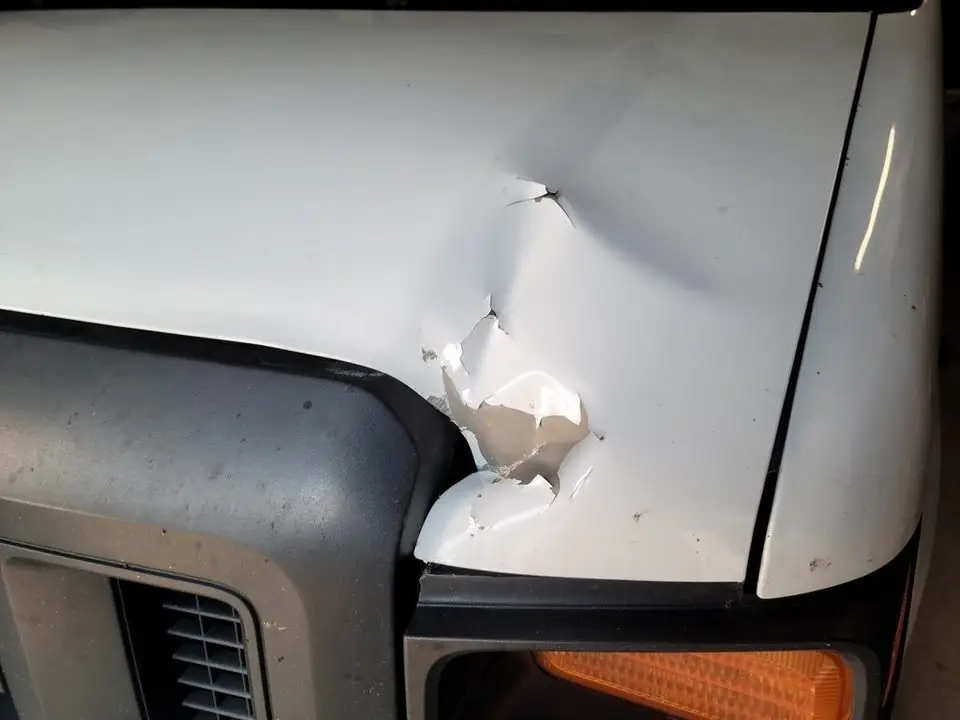
Paintless dent repair cost in 2026 at a glance
| Dent or damage | Typical size | Typical PDR cost |
|---|---|---|
| Small door ding | Dime to quarter | $75–$150 |
| Medium dent | Up to 2 in. | $125–$250 |
| Large dent | 3–6 in. | $200–$450 |
| Body line or edge dent | Any size | $150–$500 |
| Several dings, same visit | 3–5 small | $200–$500 |
| Light hail damage | Under ~100 dents | $1,500–$3,000 |
| Moderate hail damage | Most panels hit | $3,000–$6,000 |
| Severe hail damage | Hundreds of dents | $6,000–$10,000+ |
Some shops may also charge $50–$200 to remove and reinstall trim, a headliner or taillights to reach the back of a panel. A good technician will tell you upfront if that is needed.
How paintless dent repair works
Paintless dent repair is a method of pushing or pulling dented metal back into shape without disturbing the factory paint. The technician reaches behind the panel with long steel rods and slowly massages the dent out from the inside, using a special light board to read the reflection of the panel. When the back of the panel cannot be reached, glue tabs are attached to the outside and pulled with a slide hammer or lifter, then the area is tapped down to level it.
Because there is no filler, primer or paint, the original finish stays in place. That matters for resale value, since factory paint is usually more durable than a repaint and won’t show color mismatch. It also explains the price: you pay mostly for skilled labor, and a typical ding takes 30 minutes to two hours.
PDR vs. traditional body work
| Factor | Paintless dent repair | Traditional body work |
|---|---|---|
| Single small dent | $75–$150 | $250–$600 |
| Large dent on one panel | $200–$450 | $400–$1,000+ |
| Time | Often same day | 2–5 days |
| Factory paint | Kept | Panel is refinished and blended |
| Works on cracked paint | No | Yes |
Traditional repair means sanding the dent to bare metal, pulling it, applying body filler, priming, painting the panel and blending the color into the neighboring panels. It costs more because of paint materials and the extra labor. Our car dent repair cost guide covers that side in more detail, and if the paint is also scratched, see our car scratch repair cost guide.
What affects the price of PDR
1. Size and depth
Size is the starting point for most price sheets. A shallow quarter-size ding is quick work. A deep dent of the same width stretches the metal more and takes much longer to bring back without leaving high spots.
2. Location on the panel
Dents on flat, open areas of a door or hood are the easiest. Dents on a body line, near the edge of a panel, or over an internal brace are harder to reach and harder to finish cleanly, so many technicians add 25% to 50% or quote them separately.
3. Aluminum panels
Many newer trucks and luxury cars use aluminum hoods, fenders or body panels. Aluminum is less forgiving than steel and needs more care, so PDR on aluminum often costs more, commonly a 20% to 30% surcharge.
4. Access and disassembly
Roof dents may require dropping the headliner. Quarter panel dents may require pulling interior trim or taillights. Each of these adds labor time.
5. Number of dents
Most technicians charge full price for the first dent and less for each additional dent on the same panel or car. If you have several dings, bring them all in at once.
Ask for a per-dent breakdown
A fair PDR quote lists each dent or panel separately. That way you can choose to fix only the dents that bother you most, such as the ones on the driver’s door, and skip the rest.
Hail damage repair cost
Hail damage repair cost depends on how many dents there are, how big they are, and which panels were hit. PDR technicians and insurance adjusters usually count dents panel by panel and use a hail matrix that prices each panel by dent count and size. The roof, hood and trunk lid usually take the most damage because they face the sky.
- Light hail: scattered small dents, mostly on the hood and roof. Commonly $1,500–$3,000.
- Moderate hail: dents on most horizontal panels, some on doors and fenders. Commonly $3,000–$6,000.
- Severe hail: hundreds of dents, larger impacts, possibly broken glass or cracked paint. Commonly $6,000–$10,000 or more, and some panels may need replacement instead of PDR.
Hail damage is usually covered under the comprehensive part of an auto policy, not collision. You pay your deductible and the insurer pays the rest. If the repair cost gets close to the car’s value, the insurer may declare it a total loss, which can leave you with a branded title. On an older car, compare the repair estimate with the car’s value before deciding; our guide on whether it’s worth fixing an old car walks through that math.
Be careful with storm chasers
After big hailstorms, out-of-town crews often set up in parking lots. Many are skilled, but some leave quickly. Ask for a written warranty, a local address, reviews you can verify, and never sign over your insurance check before the work is done and inspected.
When paintless dent repair won’t work
PDR is not a fix for every dent. A technician will usually recommend traditional repair or panel replacement in these cases:
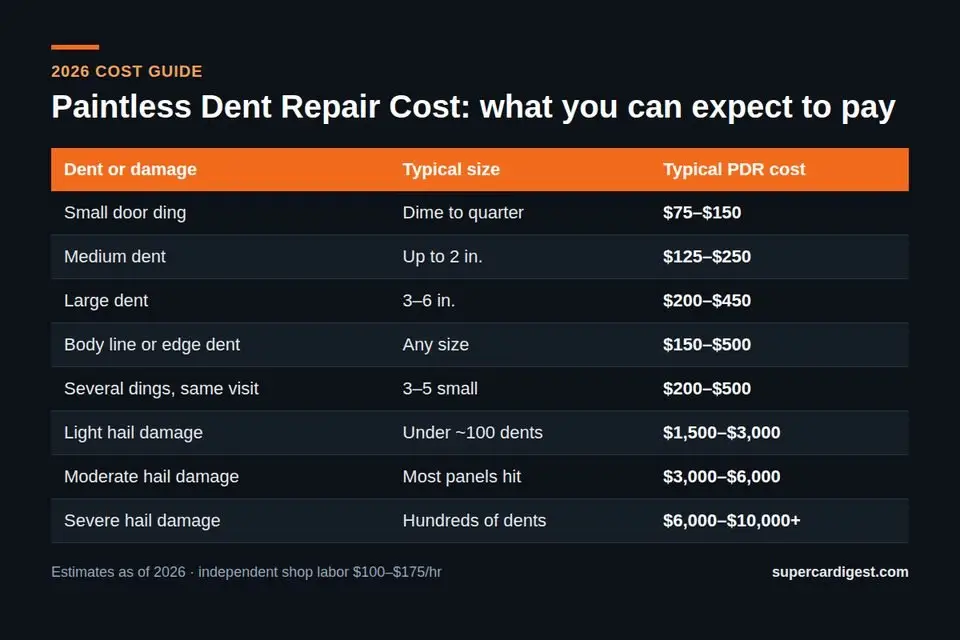
- Cracked, chipped or flaking paint. If the paint is broken, the panel needs refinishing anyway.
- Sharp creases or stretched metal. A deep, sharp crease may not come back flat without filler.
- Previously repaired panels. Body filler or thick repaint can crack when the metal is moved.
- Plastic bumper covers. These can sometimes be heated and pushed out, but cracked bumpers usually need repair or replacement. See our front bumper replacement cost guide.
- Dents on the very edge of a door or hood, or on panel seams, where the metal is doubled over.
Even when PDR can’t make a dent perfect, a skilled technician can often improve it by 80% to 90% for much less than body work. Ask what result to expect before work starts.
Can you do PDR yourself?
Suction-cup pullers and glue-pull kits sell for $20–$80. They can help with a shallow, round dent on a flat panel. The risk is pulling too hard and creating a high spot, or cracking paint on a cold day. Real PDR takes years of practice to do cleanly. For a car you care about, a professional for $100–$150 is usually money well spent.
How to pay less for dent repair
- Get a mobile PDR quote. Many technicians come to your home or office and often charge less than body shops.
- Fix several dents at once to take advantage of multi-dent discounts.
- Send clear photos from a few angles for a free estimate before you drive anywhere.
- Use insurance for hail, not for one ding. A single $150 dent is almost always cheaper to pay out of pocket than to claim.
- Act before rust. PDR works only when the paint is intact; a chipped dent left for months can start to rust.
Useful on Amazon for this job
As an Amazon Associate we earn from qualifying purchases. Always confirm fit for your exact vehicle or ask your dentist.
What PDR technicians want you to know
- Location changes the price. Dents on sharp body lines, double-walled areas or near braces take more time.
- Aluminum panels are harder and need careful technique, so expect a higher price on aluminum-bodied vehicles.
- PDR doesn’t fix paint. If the paint is cracked or scratched to metal, you’ll still need paint work.
- Small dings are often cheaper out of pocket than filing a claim, while storm or vandalism damage is usually comprehensive coverage.
- Ask about access. Good techs avoid drilling where possible, use glue pulling on double-walled panels and seal any access holes properly.
- Beware parking-lot cash offers from untrained “mobile” techs. A real pro checks the panel under a light board.
Super Car Digest · $14
The Used Car Buying Playbook
Shopping for a used car? Hail dents, repaint and hidden body work are easy to miss and expensive to fix. Get the budget worksheet, 15-minute VIN screen, test-drive routine, word-for-word negotiation scripts and a 10-point contract check.
Frequently asked questions
How much does paintless dent repair cost?
About $75–$150 for a small ding and $150–$450 for a larger dent. Hail jobs commonly run $1,500–$10,000 or more. Estimates as of 2026.
How much does hail damage repair cost?
Light hail often costs $1,500–$3,000 with PDR, moderate hail $3,000–$6,000 and severe hail $6,000–$10,000 or more. Comprehensive coverage usually pays, minus your deductible.
Is paintless dent repair worth it?
Usually yes, when the paint is intact. It keeps the factory finish, is often done the same day, and typically costs less than half of traditional body work.
How long does paintless dent repair take?
A single ding often takes 30 minutes to two hours. A hail repair can take one to several days depending on the dent count.
Does PDR show up on a vehicle history report?
A cash-paid PDR job usually does not. Repairs paid through an insurance claim may be reported, depending on the insurer and the report provider.
Can PDR fix dents on plastic bumpers?
Sometimes. Soft plastic bumper covers can often be heated and pushed back into shape, but cracks or torn mounting tabs need a bumper repair or replacement.
Sources and methodology
Price ranges combine 2026 published price lists from independent and mobile PDR technicians, body shop estimates for traditional dent repair, and typical insurance hail matrix pricing. Body shop labor reflects typical 2026 rates ($100–$175/hr independent, $150–$250/hr dealer; AAA has reported national averages around $140/hr). These are estimates; your quote will vary by vehicle, panel material, region and damage.