
Key takeaways
- Head gasket repair typically costs $1,200–$2,500 on a four-cylinder engine and $1,800–$3,500+ on a V6 or V8 at an independent shop.
- Dealers often charge $2,500–$4,500+. The parts are cheap; 6–15+ hours of labor drive the price.
- Classic blown head gasket symptoms are white exhaust smoke, unexplained coolant loss, overheating, bubbles in the coolant and milky oil.
- Confirm it with a combustion leak (block) test and a compression or leak-down test before paying for the job.
- Stop driving if the engine overheats. Running it hot can warp the head or ruin the engine. Estimates as of 2026.
The head gasket repair cost in 2026 is about $1,200 to $2,500 for most four-cylinder engines and $1,800 to $3,500 or more for V6 and V8 engines at an independent shop, with dealers often charging $2,500–$4,500 or more. The gasket itself is inexpensive; the cost comes from the many hours needed to remove the cylinder head, have it checked and resurfaced at a machine shop, and put everything back together. A blown head gasket usually shows up as white exhaust smoke, coolant that disappears without a visible leak, overheating or a milky film on the oil cap. This guide covers what you will pay, how to recognize and test for a blown gasket, an honest view of sealers, and when the car is not worth fixing.
📩 Important: after you sign up, open the email from Super Car Digest and tap Confirm. Your checklist opens right away. Not there? Check Spam or Promotions.
Head gasket repair cost in 2026 at a glance
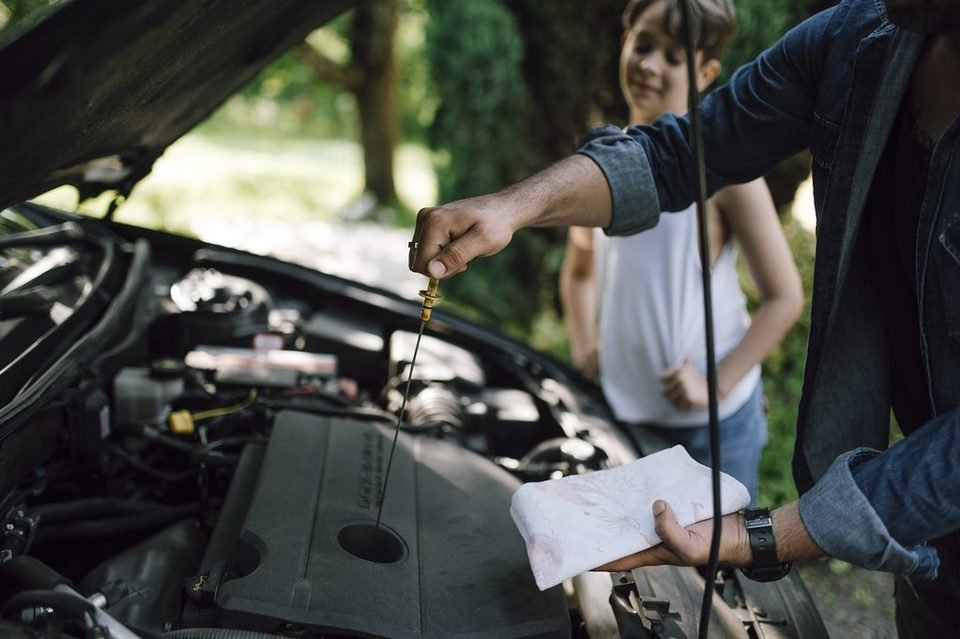
| Engine or job | Labor | Typical total (independent shop) |
|---|---|---|
| Inline 4-cylinder | 6–10 hrs | $1,200–$2,500 |
| Boxer 4-cylinder (e.g., Subaru) | 8–14 hrs | $1,800–$3,500 |
| V6 (one or both sides) | 8–15 hrs | $1,800–$3,500+ |
| V8, truck or SUV | 10–18 hrs | $2,000–$4,000+ |
| Dealership, OEM parts | $150–$250/hr | $2,500–$4,500+ |
| Head resurfacing (machine shop) | Add-on | $200–$500 |
| Diagnosis (block, compression tests) | 0.5–1.5 hrs | $100–$300 |
| Used engine instead | 8–15 hrs | $2,500–$5,000+ |
A good quote usually includes the gasket set, new head bolts where the engine uses torque-to-yield bolts, coolant, oil and filter, a thermostat, and machine-shop inspection of the head. Many shops also recommend replacing the timing belt and water pump at the same time on engines where they are already exposed, which adds parts cost but very little labor.
Symptoms of a blown head gasket
The head gasket seals the joint between the engine block and the cylinder head. It keeps combustion pressure in the cylinders and keeps coolant and oil in their own passages. When it fails, those separate systems start leaking into each other or to the outside. Common signs:
- White exhaust smoke with a sweet smell, especially after a cold start, from coolant burning in a cylinder. A little vapor on a cold morning is normal; thick, persistent white smoke is not.
- Coolant loss with no puddle under the car. You keep topping off the reservoir and cannot find where it goes.
- Overheating, often at highway speed or on hills, as combustion gases push into the cooling system.
- Bubbles in the radiator or reservoir and a swollen, hard upper radiator hose when the engine is running.
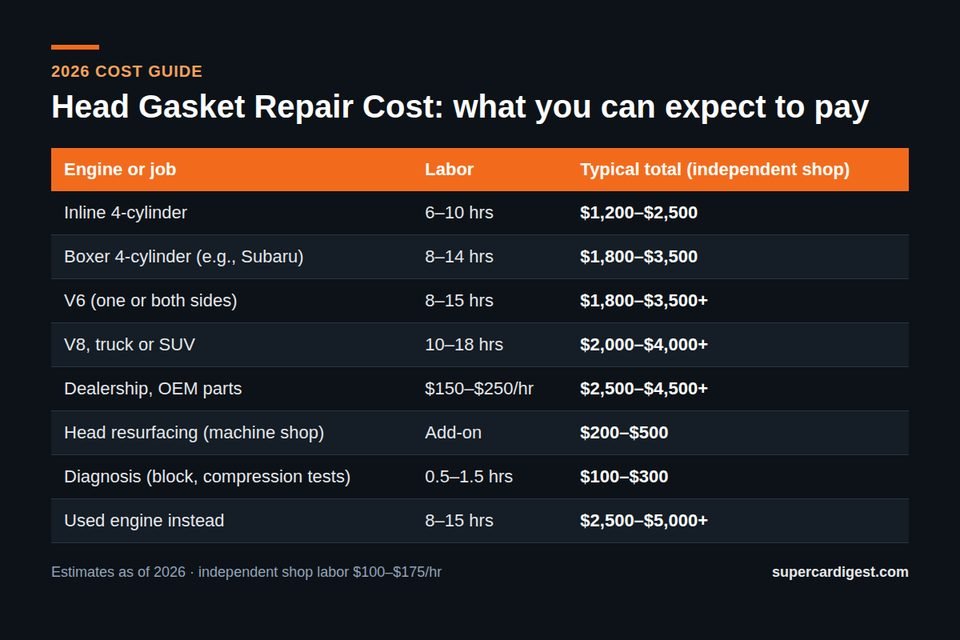
- Milky, tan or “chocolate milk” oil on the dipstick or under the oil cap, from coolant mixing with oil.
- Misfire or rough running, sometimes with a check engine light, if coolant fouls a spark plug or two cylinders lose compression.
- External leak of oil or coolant at the seam between the head and block.
Some of these overlap with simpler problems. Coolant loss can come from a hose, water pump or radiator; see our coolant leak repair cost guide. Light condensation under the oil cap can appear on cars driven only on short trips in cold weather. That is why testing matters.
If the temperature gauge climbs
Pull over safely and turn off the engine. Do not open the radiator cap or coolant reservoir on a hot engine: pressurized coolant can spray out and cause serious burns. Let it cool fully before checking levels. Driving with an overheating engine is the fastest way to turn a head gasket job into a warped head, a cracked block or a seized engine.
How to test for a blown head gasket
- Cooling system pressure test ($50–$150 at a shop). Pressurizes the system to find external leaks and to show slow internal loss.
- Combustion leak test, or block test (kits about $40–$70; shops often $50–$150). A tester sits on the radiator or reservoir neck and draws air through a blue fluid that turns yellow or green if exhaust gases are present in the coolant.
- Compression test ($100–$200). Low compression in two neighboring cylinders is a classic head gasket sign.
- Cylinder leak-down test ($100–$250). Pressurizes each cylinder and shows where the air escapes: bubbles in the coolant point to the gasket or a crack, while air in the intake or exhaust points to valves.
- Oil analysis (about $30–$60 by mail). Can confirm coolant in the oil when the signs are subtle.
A reputable shop will usually do at least two of these before quoting a head gasket. If a shop quotes $2,000+ based only on white smoke, ask for test results.
Why replacing a head gasket costs so much
On most engines, the shop has to drain fluids, remove the intake and exhaust manifolds, take off the timing belt or chain, disconnect sensors and wiring, and unbolt the cylinder head. The head then goes to a machine shop to be checked for cracks and flatness and resurfaced if needed. Reassembly requires a clean, flat block surface, new bolts on many engines, a precise torque sequence and correct timing.
V6 and V8 engines have two heads, and many shops recommend doing both sides even if only one has failed, since the other is the same age. Transverse V6 engines in minivans and crossovers can be cramped, and some trucks require lifting the cab or pulling the engine.
A frequent root cause is an earlier overheating event, often from a failed radiator, water pump, thermostat or hose. Make sure the cause is fixed during the repair, or the new gasket may fail too.
Head gasket sealers: an honest view
Pour-in sealers cost about $30–$80 and claim to seal leaks by hardening when they reach the hot leak point. Results are mixed. They have the best odds on a small leak into the cooling system or a minor external seep, on an engine that has not been badly overheated. They rarely fix a gasket that lets coolant into the oil or a large leak between cylinders, and they cannot fix a warped head or cracked block.
Sealers can also partly clog a heater core or radiator, and some shops dislike working on a cooling system that has been treated. A sealer is a reasonable gamble on an older, low-value car you plan to sell or retire soon. On a car you intend to keep for years, a proper repair is the better choice. If you try a sealer, follow the instructions closely, often including a coolant flush, and keep watching the temperature gauge.
When to walk away instead
A head gasket repair can be worth it on a car in otherwise good shape. It is harder to justify when:
- The repair cost is more than half the car’s value.
- The engine was driven while overheating and may have a warped head or damaged bearings.
- The oil is heavily contaminated with coolant, which can damage bearings.
- The car also needs a transmission, rust repair or other major work.
- Compression is low across several cylinders, suggesting overall engine wear.
Our guide on whether it’s worth fixing an old car explains the 50% rule, and the repair or replace calculator lets you plug in your numbers. Some buyers and dealers will still take a car with a known head gasket problem, which can be better than paying for a repair you will not recover.
Useful on Amazon for this job
As an Amazon Associate we earn from qualifying purchases. Always confirm fit for your exact vehicle or ask your dentist.
What experienced techs want you to know
- Insist on testing before teardown. A combustion leak (block) test and a cooling system pressure test can rule out simpler causes like a leaking hose, intake gasket or oil cooler.
- Some engines have known patterns. Older non-turbo Subaru 2.5L (EJ25) engines are known for external head gasket seepage, and some Toyota 2.4L (2AZ-FE) engines can pull head bolt threads out of the block, which needs thread inserts.
- The heads usually go to a machine shop to be checked for flatness and cracks and resurfaced if needed. This is often listed separately on the quote.
- Head bolts are often single-use stretch bolts and should be replaced. Reusing them can cause a repeat failure.
- Replace related parts while it’s open: thermostat, often the water pump, and on many engines timing belt or chain parts, plus fresh oil and coolant.
- Clean, flat surfaces matter. Leftover gasket material or a warped surface is one of the main reasons a new head gasket fails.
Check for warranty or settlement coverage
Some makers have extended engine coverage for specific models. Ask a dealer to check your VIN before you pay.
Super Car Digest · $14
The Used Car Buying Playbook
Big repair bill on an older car? Before you pay for it, run the numbers on replacing the car — and if you do switch, don’t overpay for the next one. Budget worksheet, 15-minute VIN screen, test-drive routine, word-for-word negotiation scripts and a 10-point contract check.
Frequently asked questions
How much does it cost to replace a head gasket?
About $1,200–$2,500 on most four-cylinder engines and $1,800–$3,500 or more on V6 and V8 engines at an independent shop. Dealers often charge $2,500–$4,500+. Estimates as of 2026.
Can I drive with a blown head gasket?
Only briefly and with caution. Every overheating episode risks more damage. If the engine overheats, loses coolant quickly or the oil turns milky, stop driving it.
How long does a head gasket replacement take?
Usually two to five days at a shop, including machine work on the head. Labor alone is often 6–15 hours or more.
Does head gasket sealer really work?
Sometimes, on small leaks in engines that have not been badly overheated. It rarely fixes coolant-in-oil leaks or major failures and is best seen as a short-term fix.
Is a blown head gasket covered by warranty?
It is generally covered under a powertrain warranty and many extended plans, unless the failure is blamed on neglect or overheating. See are extended car warranties worth it?
Sources and methodology
Price ranges combine 2026 estimates from the RepairPal estimator for head gasket replacement, published labor-time guides, current retail pricing for gasket sets, test kits and sealers, typical machine-shop rates, and labor at typical 2026 shop rates ($100–$175/hr independent, $150–$250/hr dealer; AAA has reported national averages around $140/hr). These are estimates; your quote will vary by vehicle, region and condition.