Key takeaways
- The typical hail damage repair cost is $1,500–$3,000 for light hail, $3,000–$6,000 for moderate damage and $6,000–$10,000+ for severe storms.
- Paintless dent repair (PDR) is the usual fix when the paint is not cracked. It is cheaper and faster than sanding, filling and repainting.
- Hail is covered under comprehensive coverage, not collision or liability. You pay your deductible, and the insurer pays the rest of the approved estimate.
- On an older car, a large hail claim can lead to a total loss even if the car still runs perfectly.
- Estimates as of 2026; prices vary by dent count, dent size, panel material, region and how busy shops are after a storm.
The hail damage repair cost for most cars in 2026 runs about $1,500 to $3,000 for light hail and $3,000 to $6,000 when most panels are dented. Severe storms that leave hundreds of dents, crack paint or break glass can push the bill past $10,000. Most hail jobs are done with paintless dent repair, which pushes dents out from behind the panel and keeps the factory paint. Panels with cracked paint, sharp creases or stretched metal need conventional body work, and a badly damaged roof may need a new roof skin. If you carry comprehensive coverage, your insurer usually pays the approved repair minus your deductible. This guide covers what drives the price, how insurance handles hail, and how to avoid problems with out-of-town repair crews.
📩 Important: after you sign up, open the email from Super Car Digest and tap Confirm. Your checklist opens right away. Not there? Check Spam or Promotions.
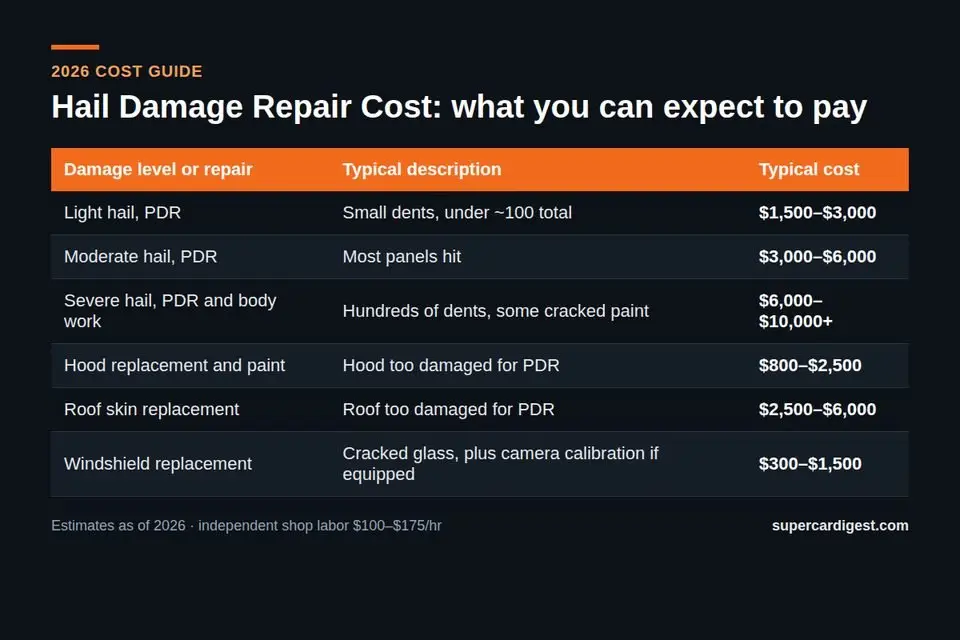
Hail damage repair cost in 2026 at a glance
| Damage level or repair | Typical description | Typical cost |
|---|---|---|
| Light hail, PDR | Small dents, under ~100 total | $1,500–$3,000 |
| Moderate hail, PDR | Most panels hit | $3,000–$6,000 |
| Severe hail, PDR and body work | Hundreds of dents, some cracked paint | $6,000–$10,000+ |
| Hood replacement and paint | Hood too damaged for PDR | $800–$2,500 |
| Roof skin replacement | Roof too damaged for PDR | $2,500–$6,000 |
| Windshield replacement | Cracked glass, plus camera calibration if equipped | $300–$1,500 |
How hail damage is priced
Hail repair is not priced like a single parking-lot ding. Most PDR shops and insurance estimating systems use a hail matrix: each panel is graded by the number of dents and their size, and each grade has a set price. The hood, roof and trunk lid usually take the most hits because they face the sky, so they make up most of the bill.
The main things that raise the price are:
- Dent count per panel. A hood with 20 dents is priced far lower than a hood with 150.
- Dent size. Dime-size dents are quick work. Half-dollar and larger dents take much more time per dent.
- Aluminum panels. Many newer hoods, trunk lids and truck bodies are aluminum, which is harder to work. Shops often add a surcharge, commonly around 25% or more.
- Access. Roof braces, headliners, rails and double-walled panels make it harder to reach the back of a dent. Removing the headliner or trim adds labor.
- Paint damage. If the paint is chipped or cracked, PDR alone will not finish the job, and the panel needs refinishing.
For pricing on one or two dents rather than a storm, see our paintless dent repair cost and car dent repair cost guides.
PDR vs. conventional body work
Paintless dent repair uses metal rods and specialized tools to massage each dent back out from behind the panel, or glue-pull tabs from the outside where the back can’t be reached. When it’s done well, the dents disappear and the original paint stays intact. That matters for resale value, because factory paint is usually better than any refinish, and a car without repaint work raises fewer questions from buyers.
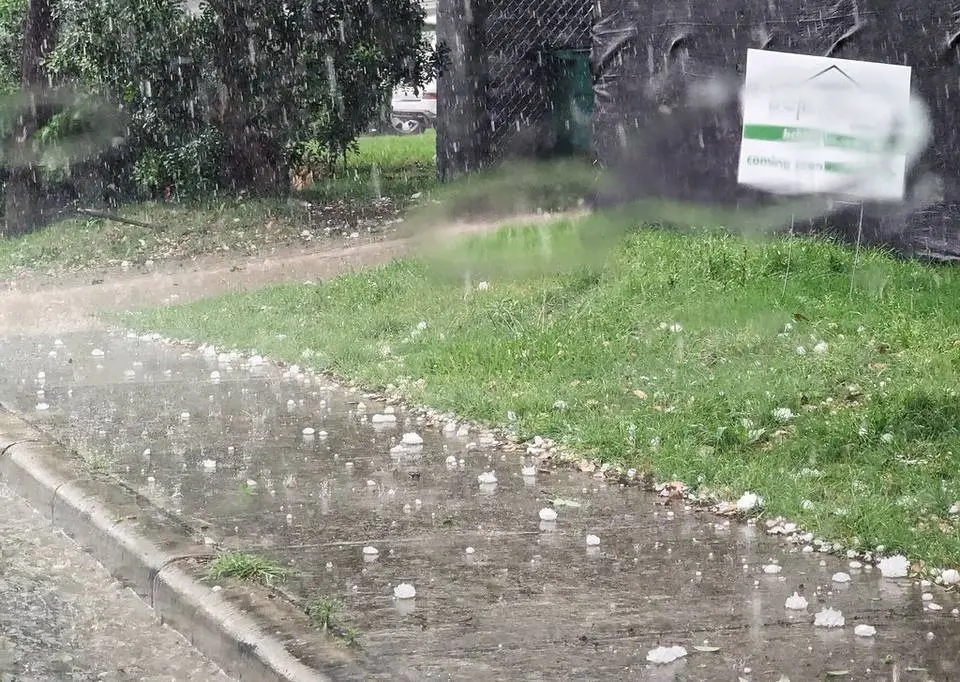
Conventional body work means pulling or hammering the metal, applying filler, sanding, priming and painting. Each painted panel often costs $400–$1,000 or more, and the paint has to be blended into neighboring panels so the color matches. Some panels are cheaper to replace than repair, especially a heavily dented hood or trunk lid.
Ask for a panel-by-panel estimate
Most hail jobs mix PDR with refinishing or replacement on a few panels. A good estimate lists the method for each panel, which makes quotes easy to compare.
Roof, hood and windshield damage
The roof is the panel that most often decides how expensive a hail claim gets. Roofs are large, flat and supported by braces, and many technicians remove the headliner to reach them. If the roof has too many large dents, or the metal is stretched, the shop may recommend replacing the roof skin. That job involves cutting out the old panel, welding or bonding in a new one, sealing and painting it, and reinstalling the headliner and trim. Ask whether PDR is realistic before agreeing to a roof replacement, since buyers may question one later.
The hood often has the heaviest damage. Many hoods can be fixed with PDR, but a heavily dented aluminum hood is commonly replaced and painted instead.
A cracked windshield is a separate repair. A basic windshield replacement often costs about $300–$500. If your car has a forward-facing camera for lane keeping or automatic emergency braking, the camera usually needs calibration after the glass is replaced, which can bring the total to $700–$1,500 on some vehicles. Broken sunroofs, mirrors and lights add to the estimate too.
How insurance handles hail damage
Hail is a weather event, so it falls under comprehensive coverage on an auto policy. Liability-only policies do not cover it, and collision coverage doesn’t apply. If you have comprehensive, the usual process looks like this:
- Document the damage. Take photos of every panel and the glass, plus the date and location of the storm.
- File the claim. Many insurers set up drive-through inspection sites after big storms.
- Get the adjuster’s estimate. This is the insurer’s count of the damage, often written using a hail matrix.
- Choose a shop. In most states you can pick your own repair shop. If the shop finds more damage once work starts, it submits a supplement to the insurer.
- Pay your deductible. The insurer pays the approved amount minus your comprehensive deductible, often $250–$1,000.
Hail is usually treated as a not-at-fault weather claim, but insurers differ on how claims affect renewal rates, so ask your agent before filing a claim that barely exceeds your deductible.
Be careful with “we’ll cover your deductible” offers
Some repair crews advertise that they will waive or absorb your deductible. Depending on how it’s done, that can amount to misrepresenting the cost to your insurer, and it can leave you in a dispute with your insurance company. Read your policy and ask your insurer before agreeing to it.
When hail totals a car
An insurer may declare the car a total loss when the repair estimate gets close to the car’s actual cash value. Each insurer and state uses its own threshold. Because hail repair on an older car can easily reach $6,000 or more, a 10- or 12-year-old car with a modest market value can be totaled by hail even though it drives fine. You then receive the car’s value minus your deductible, and the car may get a branded title if it is sold through salvage. In some cases you can keep the car and take a reduced payout, which affects later registration and insurance. Ask your insurer exactly what happens in your state before you accept.
Getting estimates and avoiding storm chasers
After a big hail storm, traveling PDR crews often set up in parking lots and rented tents. Many are skilled technicians who follow storms for a living. Others are not. Because the work often leaves town before problems show up, a little homework goes a long way:
- Get at least two estimates, including one from an established local body shop or PDR company.
- Ask for a written warranty and who backs it after the crew leaves town.
- Check reviews and the business address. A local address and a long history are good signs.
- Don’t sign blank forms or sign over insurance payments under pressure. The National Insurance Crime Bureau warns that repair scams rise after major storms.
- Inspect the work in good light before you pay the final balance. Look for high spots, cracked paint and leftover dents.
How long hail repair takes
Light hail repaired with PDR can take one to three days. Moderate damage usually takes three days to a week. Cars that need panel replacement, roof work or paint can take one to three weeks, longer if parts are back-ordered. After a big storm, the waiting list is often the longest delay. Check whether your policy includes rental car coverage before you drop the car off.
Buying a car with hail damage
Unrepaired cosmetic hail can make a used car a fair deal if the price reflects it. Check the title and history report for a salvage or hail brand, and ask whether an insurance payout was already taken, since old damage usually can’t be claimed again.
Useful on Amazon for this job
As an Amazon Associate we earn from qualifying purchases. Always confirm fit for your exact vehicle or ask your dentist.
What hail repair pros want you to know
- PDR vs paint is the big split. If the paint is intact, paintless dent repair is usually possible. Cracked clearcoat or stretched metal means body work and paint.
- Roof dents often mean headliner removal so the tech can reach the panel, which adds labor even with PDR.
- Aluminum panels cost more to fix, and some trim pieces (window moldings, drip rails) must be replaced rather than repaired.
- Don’t accept the first estimate as final. Outdoor or photo estimates miss shallow dents. A PDR shop can inspect under lights and send a supplement to your insurer.
- Avoid DIY tricks like dry ice, heat guns or glue-puller kits, which can crack paint and turn a PDR job into paint work.
- Be careful with pop-up “storm chaser” shops that offer to waive your deductible. Choose a shop that removes trim properly and follows factory procedures for airbags and camera calibration.
Super Car Digest · $14
The Used Car Buying Playbook
Shopping after a hail season? Learn how to spot hidden hail repairs and title brands before you buy, and how to use cosmetic damage to negotiate a fair price. Budget worksheet, 15-minute VIN screen, test-drive routine, word-for-word negotiation scripts and a 10-point contract check.
Frequently asked questions
How much does hail damage repair cost?
Most cars cost about $1,500–$3,000 for light hail and $3,000–$6,000 for moderate damage. Severe hail with paint damage, roof work or glass replacement can top $10,000. Estimates as of 2026.
Does insurance cover hail damage?
Yes, if you carry comprehensive coverage. You pay your comprehensive deductible, and the insurer pays the rest of the approved repair.
Can I keep the insurance money and not fix the hail damage?
If you own the car outright, many insurers allow it, but rules vary. If you have a loan or lease, the lender is usually listed on the check and may require the repair. Unrepaired damage may also be excluded from future claims.
Is PDR as good as body work for hail?
When the paint is intact, quality PDR is usually better because it keeps the factory finish. It can’t fix cracked paint or sharply stretched metal.
Will hail damage total my car?
It can, especially on an older car with a low market value, because the repair estimate can approach the car’s actual cash value.
How long do I have to file a hail claim?
It depends on your policy and state. File as soon as you can, since delays make it harder to prove when the damage happened.
Sources and methodology
Price ranges combine typical 2026 PDR hail-matrix pricing, body shop labor and paint rates, and current parts prices for hoods, roof panels and windshields. Coverage information draws on the Insurance Information Institute overview of auto policies, storm and contractor fraud guidance from the National Insurance Crime Bureau, hail background from NOAA’s National Severe Storms Laboratory, and consumer repair advice from the Federal Trade Commission. These are estimates; your quote will vary by vehicle, region and the extent of damage.