Key takeaways
- A rear wheel bearing replacement typically costs $250–$600 per side at an independent shop when the bearing comes as a bolt-on hub assembly.
- A press-in bearing is a cheaper part but takes more labor and a hydraulic press, so the total is often $300–$700 per side.
- Parts run about $40–$300; labor is usually 1–3 hours per side.
- The classic symptom is a humming or growling noise that rises with speed and may change when you steer left or right.
- Estimates as of 2026; your price depends on the vehicle, part brand and local labor rates ($100–$175/hr independent, $150–$250/hr dealer).
The rear wheel bearing replacement cost for most cars, SUVs and light trucks in 2026 is about $250 to $700 per side at an independent shop: roughly $40–$300 for parts and $100–$450 in labor. Bolt-on hub assemblies sit at the lower end, while press-in bearings and full-floating truck axles cost more in labor. Dealers using OEM parts commonly charge $500 to $1,000 or more per side. This guide explains the difference between hub assemblies and press-in bearings, the warning signs, how safe it is to keep driving, and how to avoid overpaying.
📩 Important: after you sign up, open the email from Super Car Digest and tap Confirm. Your checklist opens right away. Not there? Check Spam or Promotions.
Rear wheel bearing replacement cost in 2026 at a glance
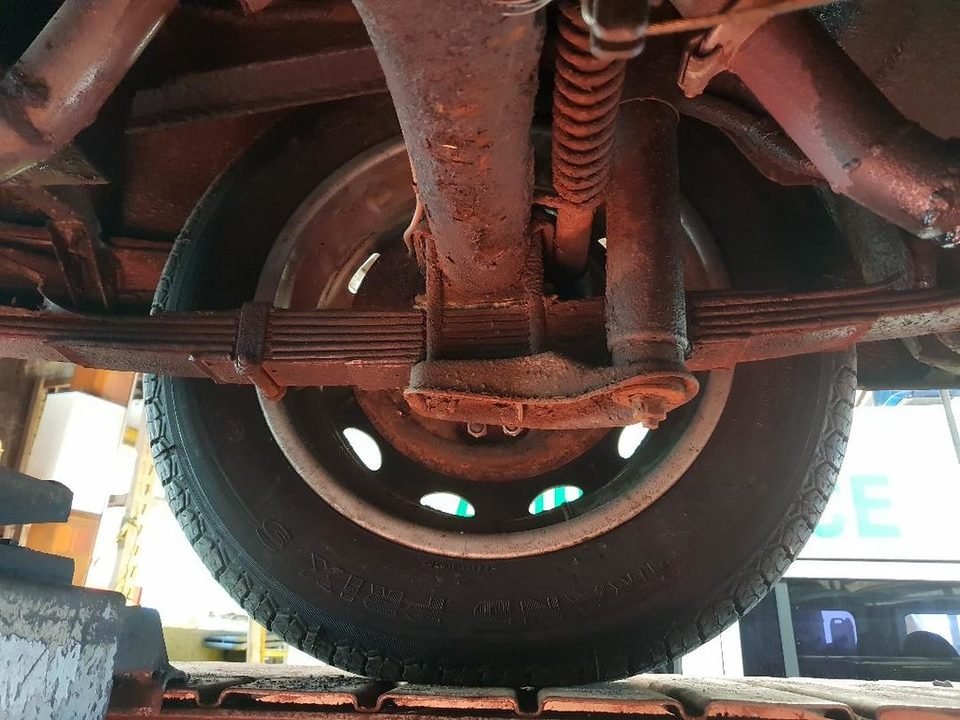
| Job (per side) | Parts | Labor | Typical total (independent shop) |
|---|---|---|---|
| Rear hub assembly, compact or midsize FWD car | $50–$180 | 1–1.5 hrs | $250–$450 |
| Rear hub assembly, SUV or crossover (AWD) | $90–$300 | 1–2 hrs | $300–$600 |
| Press-in rear bearing (independent rear suspension) | $40–$120 | 2–3 hrs + press | $300–$700 |
| Rear axle bearing and seal, solid-axle truck or RWD car | $40–$150 | 1.5–3 hrs + gear oil | $300–$650 |
| Tapered roller bearings, older RWD or trailer-style drum hub | $30–$90 | 1–1.5 hrs | $180–$350 |
| Full-floating axle hub, heavy-duty pickup | $150–$400 | 2–3.5 hrs | $450–$950 |
| Both rear sides, same visit (hub assemblies) | $100–$500 | 2–3.5 hrs | $450–$1,050 |
| Dealership, OEM hub or bearing | OEM ($150–$500+) | $150–$250/hr | $500–$1,000+ |
On many vehicles the wheel speed sensor for the ABS is built into the rear hub, so a new hub includes a new sensor. If the sensor is separate and the old one breaks during removal, budget extra. Our ABS sensor replacement cost guide has those prices.
Hub assembly vs. press-in bearing: what you are paying for
A wheel bearing is a set of steel balls or rollers in a sealed ring that lets the wheel spin smoothly on the axle or spindle while carrying the weight of the car. Rear bearings are built in a few different ways, and the design largely sets your price.
A hub assembly (also called a hub and bearing unit) combines the bearing, the wheel hub and the wheel studs, and often the ABS sensor, in one bolt-on part. The mechanic removes the wheel, brake caliper and rotor (or drum), unbolts the old hub and bolts on the new one. The part costs more, but labor is short. Most front-wheel-drive cars use this design on the rear.
A press-in bearing sits inside a steering knuckle or carrier. The knuckle often has to come off the car, and the old bearing is pressed out and the new one pressed in with a hydraulic press. The bearing itself may cost only $40–$120, but the labor and equipment make the total similar to, or higher than, a hub assembly. Many AWD vehicles and some sedans use this layout.
On rear-wheel-drive trucks and older cars with a solid rear axle, the bearing sits inside the axle tube. The shop removes the differential cover, pulls the axle shaft, replaces the bearing and seal, then refills the gear oil.
Signs of a bad rear wheel bearing
- Humming, droning or growling that gets louder as you go faster, often first noticed at 30–50 mph.
- Noise that changes when you steer or change lanes. Loading one side of the car can make a bad bearing louder or quieter.
- Vibration felt through the seat or floor that rises with speed.
- Grinding or roughness when the wheel is spun by hand with the car lifted.
- Play or wobble when the tire is rocked at the top and bottom while off the ground.
- ABS or traction control warning light, if the bearing damage affects a built-in wheel speed sensor.
Rear bearing noise is often confused with tire noise. Cupped or uneven tires make a similar hum, but it usually does not change when you steer. A bad bearing is also different from a worn CV axle, which tends to click in turns rather than hum. See our CV axle replacement cost guide to compare the symptoms.
Have the shop confirm which side
Sound travels through the car, so a rear bearing can sound like it is in the front or on the wrong side. A shop can use a stethoscope or a chassis-ear tool on a road test, or check play on a lift, before you pay for parts.
Is it safe to drive with a bad rear wheel bearing?
For a short time, a bearing that only hums is usually drivable, but it should be repaired soon. Wheel bearings wear gradually at first, then can deteriorate faster as heat builds and the internal surfaces break down. There is no reliable number of miles you can count on.
This is a safety part. A badly worn bearing can let the wheel wobble, upset braking, damage the ABS sensor and wear the brake rotor unevenly. In the worst case, the bearing can seize or separate, and on some designs the wheel and hub can come loose from the car. That is rare, but the risk is real enough that a noisy bearing should not wait months.
Stop driving if you notice these
Loud grinding, a wheel that wobbles or feels loose, a burning smell from one wheel, or a hub that is hot to the touch after a short drive. Avoid the highway and arrange a tow if the noise is severe.
What drives the price up or down
1. Bearing design
Bolt-on hubs are quick. Press-in bearings and solid-axle bearings take longer and may need a press, special pullers or gear oil. Heavy-duty full-floating truck hubs have large parts and more steps.
2. Drivetrain
On front-wheel-drive cars, the rear wheels are not driven, so the hub is simple. On AWD and RWD vehicles, the axle passes through the bearing, and the shop may need to remove the axle nut or the axle itself.
3. Rust and seized parts
In snow-belt states, hubs can rust tightly into the knuckle and bolts can seize. That can add an hour or more. If a bolt snaps or a knuckle is damaged, parts and labor go up.
4. Part quality
Budget hub assemblies can cost as little as $40, but quality varies a lot. A mid-priced name-brand or OEM unit usually lasts longer and is worth the extra $30–$100 on a car you plan to keep.
Dealer vs. independent shop vs. DIY
| Option | Typical cost per side | Pros | Cons |
|---|---|---|---|
| Dealership | $500–$1,000+ | OEM parts, factory procedures | Highest labor rate and parts markup |
| Independent shop | $250–$700 | Fair labor rate, choice of parts | Part quality depends on the shop |
| Chain shop | $250–$650 | Quick, often coupons | May push extra brake or suspension work |
| DIY | $40–$300 in parts | Lowest cost on bolt-on hubs | Needs jack stands, breaker bar, torque wrench; press-in bearings need a press |
A bolt-on rear hub is one of the more approachable DIY jobs if you have the tools and can torque the hub bolts and axle nut to spec. Press-in bearings are a different story: without a press, many home mechanics pull the knuckle and pay a shop $40–$100 to press the bearing in.
How to pay less without cutting corners
- Confirm it is the bearing and not tire noise before buying parts.
- Choose a quality aftermarket hub instead of the cheapest option or a dealer-only part on an older car.
- Get two quotes, including one from an independent shop.
- Combine with brake work if pads or rotors are due, since the labor overlaps.
- Replace only the bad side unless the other is also noisy or has play.
- Check your coverage. Some extended plans and powertrain warranties on AWD vehicles cover bearings. See are extended car warranties worth it?
When to walk away from the repair
A rear wheel bearing on its own is almost never a reason to give up on a car. It is a common wear item and usually costs less than a set of tires. The math changes only when the bearing is one entry on a long list of big repairs on a high-mileage vehicle. Our guide on how many miles is too many for a used car helps put mileage in context.
Add up every repair the car needs and compare the total with its value. Our guide on whether it’s worth fixing an old car explains the 50% rule, and the repair or replace calculator lets you run your own numbers.
Useful on Amazon for this job
- Rear wheel hub bearing assembly (by vehicle)
- Click-type torque wrench (1/2 in.)
- Jack stands (3-ton pair)
As an Amazon Associate we earn from qualifying purchases. Always confirm fit for your exact vehicle or ask your dentist.
Super Car Digest · $14
The Used Car Buying Playbook
Big repair bill on an older car? Before you pay for it, run the numbers on replacing the car — and if you do switch, don’t overpay for the next one. Budget worksheet, 15-minute VIN screen, test-drive routine, word-for-word negotiation scripts and a 10-point contract check.
Frequently asked questions
How much does it cost to replace a rear wheel bearing?
About $250–$700 per side at an independent shop and $500–$1,000 or more at a dealer. Bolt-on hub assemblies are usually at the lower end. Estimates as of 2026.
Is a hub assembly better than a press-in bearing?
Neither is better in general; your car is designed for one or the other. Hub assemblies cost more as parts but are faster to install. Press-in bearings are cheaper parts that need more labor and a press.
What does a bad rear wheel bearing sound like?
Usually a hum, drone or growl that gets louder with speed, sometimes changing when you turn. Severe wear can turn it into grinding.
How long can you drive on a bad rear wheel bearing?
There is no safe guarantee. Some last weeks or a few months after the noise starts, others fail sooner. Plan the repair promptly, and stop driving if you hear grinding or feel a wobble.
Should rear wheel bearings be replaced in pairs?
Not necessarily. Each side can be replaced on its own. Doing both makes sense if both are noisy, both have play, or the car has high mileage and you want to avoid a second visit.
How long do rear wheel bearings last?
Many original bearings last 85,000–150,000 miles or more. Potholes, curb strikes, water intrusion and low-quality replacement parts can shorten that.
Sources and methodology
Price ranges combine 2026 estimates from the RepairPal estimator for wheel bearing and hub assembly replacement, published labor-time guides, current retail pricing for aftermarket and OEM hubs and bearings, and labor at typical 2026 shop rates ($100–$175/hr independent, $150–$250/hr dealer; AAA has reported national averages around $140/hr). These are estimates; your quote will vary by vehicle, region and condition.