Disclosure: This post contains affiliate links. If you buy through them, we may earn a small commission at no extra cost to you.
Tires lose air slowly, and a single cold night can be enough to turn on the tire pressure warning light. A portable tire inflator lets you top up the pressure at home or on the roadside instead of searching for a working gas station air machine, which often needs coins and may have a broken gauge.
This guide explains how to choose one and compares three popular portable tire inflators sold on Amazon: a corded 12-volt compressor, a heavy-duty kit, and a cordless model. We have not lab-tested them, so the notes come from the listing specifications and common buyer needs. Check the current listing and recent reviews before you buy.
Quick answer
- Everyday car use and a trunk kit: a corded 12-volt digital inflator such as the AstroAI model below is simple and does not run out of battery.
- Larger tires, trucks and SUVs: the VIAIR 88P is a long-running compressor kit listed for up to 33-inch tires at 120 PSI.
- No cord, easy storage: the Fanttik X8 APEX is a cordless, rechargeable inflator.

📩 Important: after you sign up, open the email from Super Car Digest and tap Confirm. Your checklist opens right away. Not there? Check Spam or Promotions.
What to Look for in a Portable Tire Inflator
- Power source: Corded 12-volt units plug into the car’s outlet and keep going as long as the engine runs. Cordless units are convenient, but the battery limits how many tires you can fill per charge.
- Maximum pressure and tire size: Most passenger cars need a modest pressure, but trucks and larger tires need a compressor rated for bigger volumes. Check the listing for its maximum PSI and recommended tire size.
- Digital gauge and auto shut-off: You set the target pressure and the unit stops by itself. This is the easiest way to avoid over-inflating.
- Duty cycle: Small compressors need to rest between uses. If you will fill four large tires in a row, look for a model that can handle it.
- Cord and hose length: A short cord that cannot reach the rear tires is a common complaint. Measure from the outlet to your furthest tire.
- Noise, light and storage: An LED light helps at night, and a bag keeps hoses and adapters together in the trunk.
The Best Portable Tire Inflators on Amazon
Best for Everyday Cars
AstroAI 12V Digital Portable Air Compressor
Best for: drivers who want a simple corded inflator with a digital gauge
This AstroAI compressor is listed as a 12-volt DC unit with a digital gauge, a stated airflow of 35 liters per minute, overheat protection, extra nozzle adapters and an LED light. It is aimed at car tires, bikes and sports equipment.
- ✅ Pros: Digital gauge, extra nozzles, no battery to charge
- ⚠️ Keep in mind: It depends on your car’s power outlet and a long engine-on session for several tires
Best for Larger Tires
VIAIR 88P Portable Compressor Kit
Best for: trucks, SUVs and drivers with larger tires
The 88P is listed as a 12-volt compressor kit rated to 120 PSI for tires up to 33 inches. Kits like this are popular for off-road and truck use where a small tire pump may struggle.
- ✅ Pros: Built for larger tires, long-running brand
- ⚠️ Keep in mind: It is bulkier than a small car inflator and usually has a manual gauge, so check the listing
Best Cordless Option
Fanttik X8 APEX Cordless Tire Inflator
Best for: people who want a compact cordless inflator for the glove box or door pocket
The X8 APEX is a rechargeable, handheld inflator with a digital display. Cordless inflators are quick to use at home, but they run on a battery, so charge it ahead of time.
- ✅ Pros: No cord, small, easy to keep in the car
- ⚠️ Keep in mind: The battery limits how much you can inflate on one charge, and large truck tires take longer
How to Inflate Your Tires Correctly
- Find the recommended pressure on the sticker inside the driver’s door jamb or in the owner’s manual. Do not use the number molded on the tire sidewall, which is the tire’s maximum.
- Check the pressure when the tires are cold, meaning the car has been parked for a few hours or driven only a short distance.
- Remove the valve cap, attach the inflator firmly, and set the target pressure if your model has a digital setting.
- Start the inflator. With a corded unit, keep the engine running so you do not drain the battery.
- Stop at the recommended pressure, remove the nozzle quickly, and replace the valve cap.
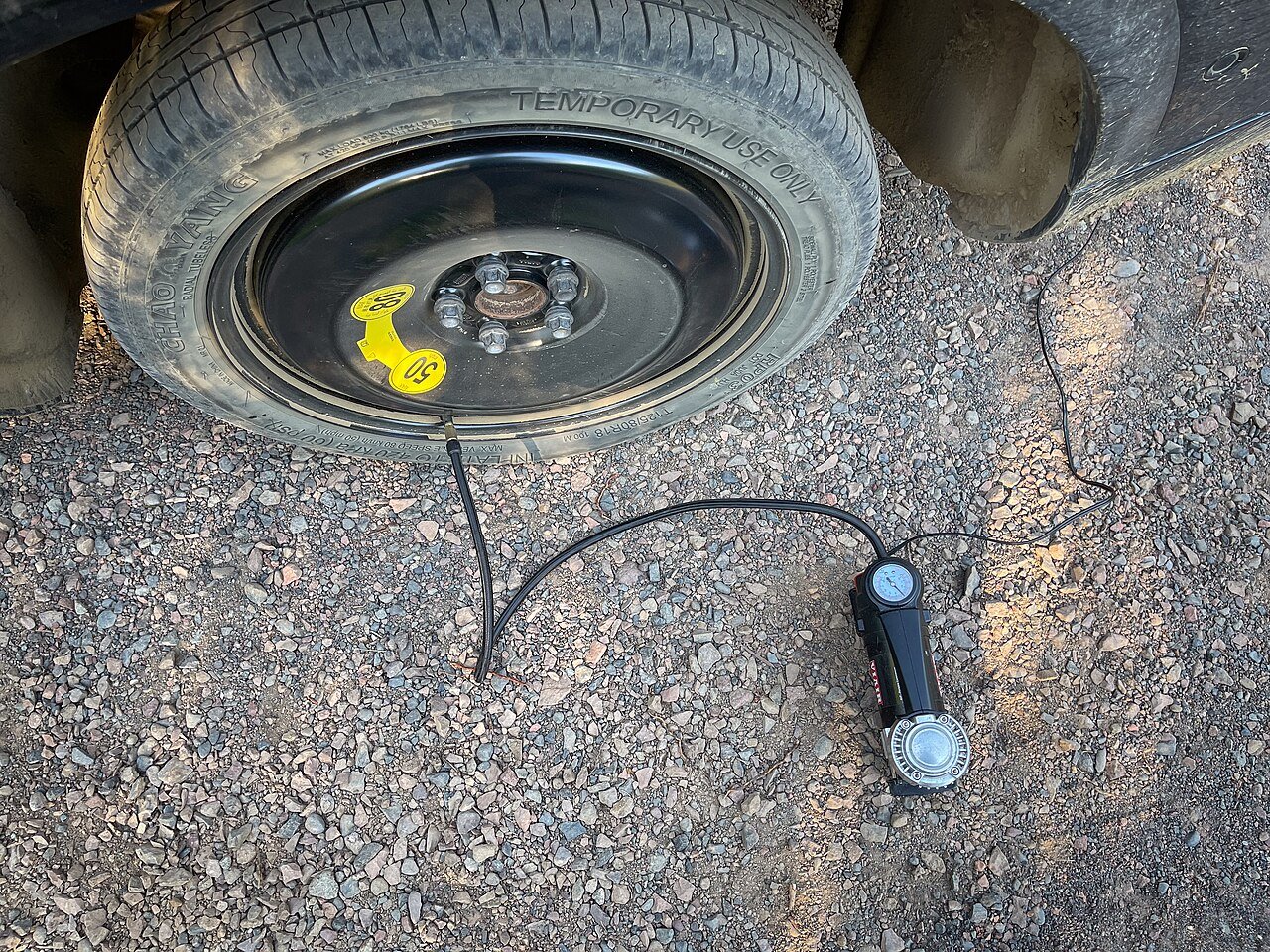
- Check all four tires and the spare if your car has one.
When Air Is Not the Problem
If a tire keeps losing pressure within days, there may be a slow leak from a nail, a damaged valve or a poor bead seal. See our guide to tire repair cost for what a patch or plug repair usually involves. If the tire pressure light stays on after you have filled all the tires to the correct pressure, or flashes, a sensor may be at fault; TPMS sensor replacement cost explains that repair. A portable inflator is also a handy companion to a portable jump starter in your emergency kit.
Super Car Digest · $14
The Used Car Buying Playbook
Shopping for a used car? Most buyers overpay in four predictable places. This playbook closes every one of them. Budget worksheet, 15-minute VIN screen, test-drive routine, word-for-word negotiation scripts and a 10-point contract check.
Get the Playbook →Frequently Asked Questions
What PSI should my tires be?
Use the pressure on the placard inside the driver’s door jamb or in your manual. It differs by vehicle and sometimes between the front and rear tires.
Can a portable inflator fill a flat tire?
It can add air to a tire that is low, but if the tire is completely flat or has visible damage, a puncture or damaged sidewall may be the cause. Have it inspected before driving at speed.
Is a cordless or corded inflator better?
Corded inflators don’t run out of charge and are good for several tires. Cordless inflators are easier to store and use, but you need to keep the battery charged.
Should I keep the engine running while using a 12-volt inflator?
Yes, for corded models that use the car’s outlet. It prevents a drain on the battery, especially if you are filling more than one tire.
This article is general information, not professional mechanical advice. Follow your vehicle manual and the instructions that come with your inflator.